


Hello, hello!
You’ve probably noticed that I’ve been publishing more interviews lately. I’ve been busy with a 6-week writing workshop—where I had to turn in one 1500-word essay each week—leaving very little time (or brainpower) for me to come up with something interesting (of my own) to share here. Either way, I love asking questions and spreading the word about the people I chat with, so there are more interviews in the works!
I’ll also share more of my own writing in the coming weeks. I’m thinking about a 100-word micro-memoir series that captures small, special moments, especially during the mini-sabbatical I’m taking this summer following my mom’s celebration of life at the end of May. Or maybe it will just be a travel journal, let’s see!
After a stop in NYC, I’ll be traveling around the US with my boyfriend and 10-year-old niece for three weeks. We’ll make our way by car from New York to Maryland, then to Tennessee, followed by a flight to California for the World Cup, and we’ll finish off with a family visit in Santa Fe and 4th of July celebrations in Colorado. Any tips you have for traveling with a tween, please send them my way!
I might also bring my mom along… Well, one-third of her. We divided her remains into three so she can continue hanging out with all three of her children.
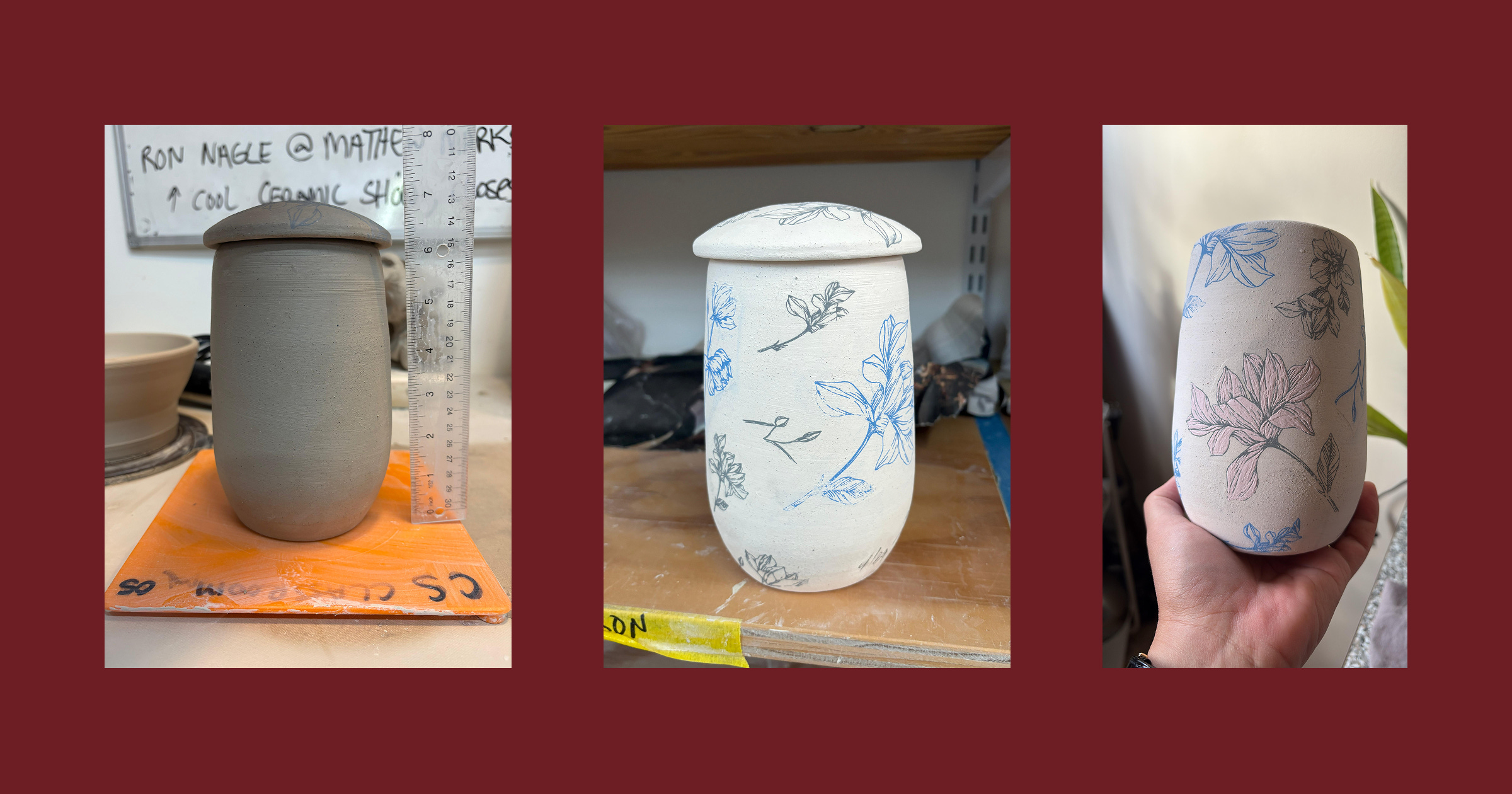
The ceramic urn my dear friend is making for her is shaping up nicely. It’s touching to work on this project with a close friend.
In the meantime, I’ve been reading a lot of memoirs to get inspired and learn more about the craft of writing them (now that I’m working on my own memoir—eek!).
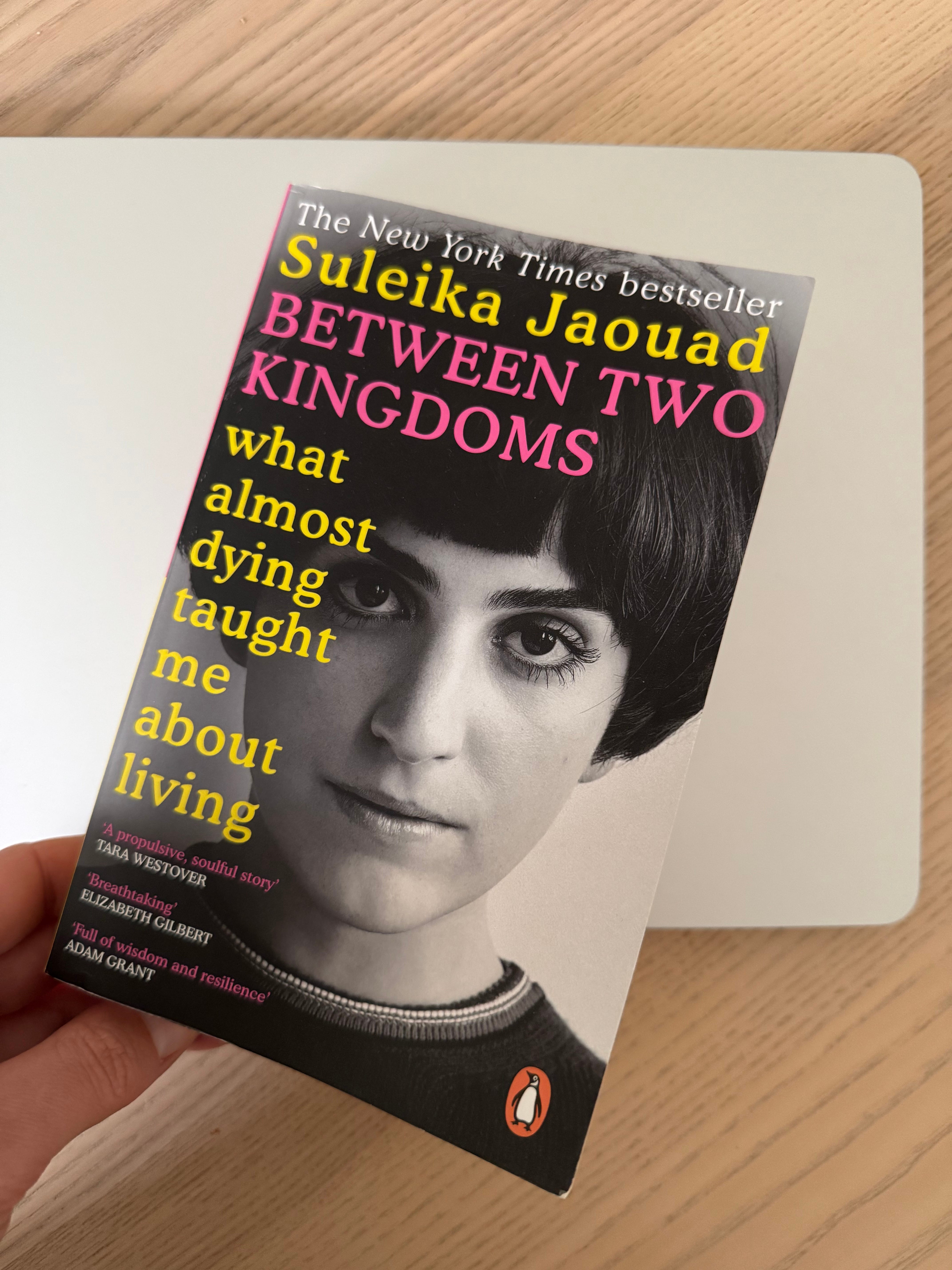
Most recently, I finished Between Two Kingdoms by Suleika Jaouad, and all I have to say is WOW. Well, I have a lot more to say, which I’ll get into soon, but she is an amazing, strong, and resilient woman. She’s also a great writer.
While I don’t relate directly to her experience of being diagnosed with cancer at 22, and the treatment and recovery that came along with it, I do relate to the general idea of operating in survival mode while dealing with a difficult time for an extended period and then trying to figure out how to fully live again once you make it to the other side.
Since losing my mom, I’ve been reflecting a lot on what we’ve all been through as a family over the last almost five years of her Alzheimer’s journey. Sometimes when I’m working on the last bits of admin, to close up her accounts, etc., I search my Google Drive or a spreadsheet that I had created at the beginning of all this, and for a second, I can’t believe how I managed it all on top of my own life admin and while I was in the midst of starting over in Amsterdam post-divorce. My 30s were great. I’m grateful. I feel lucky for the life I’ve built, but I realize even more now that I was living in the in-between, flying back to the US a few times a year (sometimes for up to six weeks) to spend time with my mom and help my brother. I’m exhausted!
Mentally and emotionally, my mom had been gone for a while, but I thought that once she was physically gone (sheesh, that sounds bad, but it feels like the most honest way of saying it), I’d suddenly feel lighter and carefree again. I thought I’d feel inspired again to do more faraway international travel because I wouldn’t have to worry about whether I’d get a call from my brother about a new development or a recent incident, like a seizure, stroke, or fall. Or even worse, that she had suddenly died.
But I’m not there yet, nor do I feel like I need to be. I think it will likely take a while until I am, or I may never get to where I’m imagining. I’m learning that grief doesn’t come neatly wrapped with a pretty ribbon that you get to untie and boom, you’re suddenly gifted with being “normal” again. Wouldn’t that be nice?
I relate to what Suleika wrote on page 190, “Grief is a ghost that visits without warning. It comes in the night and rips you from your sleep. It fills your chest with shards of glass. It interrupts you mid-laugh when you’re at a party, chastising you that, just for a moment, you’ve forgotten. It haunts you until it becomes a part of you, shadowing you breath for breath.”
I also resonate with this excerpt from page 211, “I’ve spent the past fifteen hundred days working tirelessly toward a single goal—survival. And now that I’ve survived, I’m realizing I don’t know how to live.”
From the time my mom was diagnosed with Alzheimer’s until the day we lost her was a little over fifteen hundred days… Saying that I don’t know how to live is probably a bit extreme in my case, but I find myself evaluating more and more what I want to do with my life and how I want to live it in a way that I can look back on and feel like I lived to my fullest (whatever that may be!). Losing a parent really makes you question your own mortality and life purpose, at least I think so.
Suleika writes about how she struggled to figure out how to live again after she had spent roughly four years undergoing intensive treatment for leukemia, including chemotherapy and a bone marrow transplant. Now, again, my situation is very different, but I think we often hear about the challenging times people have experienced and how they “survived.” But then what happens afterward? Once they’ve made it through? I’m still figuring this part out.
She writes about how, in times of crisis, we sometimes split into three selves: the past, the present, and the future. In her case, that’s pre-diagnosis, sick, and recovering.
In my case, I don’t specifically see myself split into three, but I do find that framing my grief (and maybe also my relationship with my mom?) into three buckets helps me make more sense of it. I’m grieving the mom I once had as a child and up until her initial decline, the mom I saw wither away one tiny loss after another, and the adult relationship I’ll never have with my mom. Which, now that I write it here, is also three versions of myself… The me before, during, and after my mom’s Alzheimer’s journey. I never know if “journey” is the right word, but that’s truly what it felt/feels like.
On page 138, Suleika writes, “Maybe the challenge is to locate the thread that strings these selves together.” I couldn’t agree more, but I have a feeling it’s much easier said than done.
Once she was cancer-free, and her doctors approved, Suleika went on a solo cross-country US road trip to visit many of the people who wrote her letters and emails after reading her NYT column, Life, Interrupted, which she often wrote from her hospital bed while in isolation during treatment. Her story is incredibly inspiring and uplifting, but she doesn’t sugarcoat the challenges she faced even after she was cancer-free, like getting sick easily, sometimes feeling unsafe traveling alone as a woman, and feeling unsure of her place in the world. She had no idea what she was supposed to do next.
But slowly, she learned to embrace the unknown. She ends the book with this beautiful line, “Wherever I am, wherever we go, home will always be the in-between place, a wilderness I’ve grown to love.”
There’s so much more I could share about this book, but for those of you who haven’t read it, I don’t want to spoil it!
See you soon,
Alexis
P.S. If you found this post interesting, hit the ♡ button below to help others find it (and so I know what’s resonating). To further support my work, consider upgrading your subscription. Thanks so much.
Mera Magazine features weekly essays, interviews, book recs, and more from Amsterdam-based writer Alexis Mera Damen. Subscribe to show your love and stay in the know!