


What does it really mean to “age well”, and who gets to decide?
For decades, beauty editor Valerie Monroe has had a front-row seat to the industry’s promises, pressures, and procedures. As the longtime beauty director at O, The Oprah Magazine, she reported on creams, lasers, fillers, and the psychology behind why we chase them.
Now, she writes candidly on her Substack, How Not to F*ck Up Your Face, about aging, cosmetic treatments, and the emotional complexity of watching your own face change.
In this conversation, we talk about empowerment vs. fear, the invisibility we feel as we age, what actually works for your skin, and the one beauty mindset shift she believes matters most.
Get more interviews, essays, book recs, and other fun stuff in your inbox by subscribing to Mera Magazine.
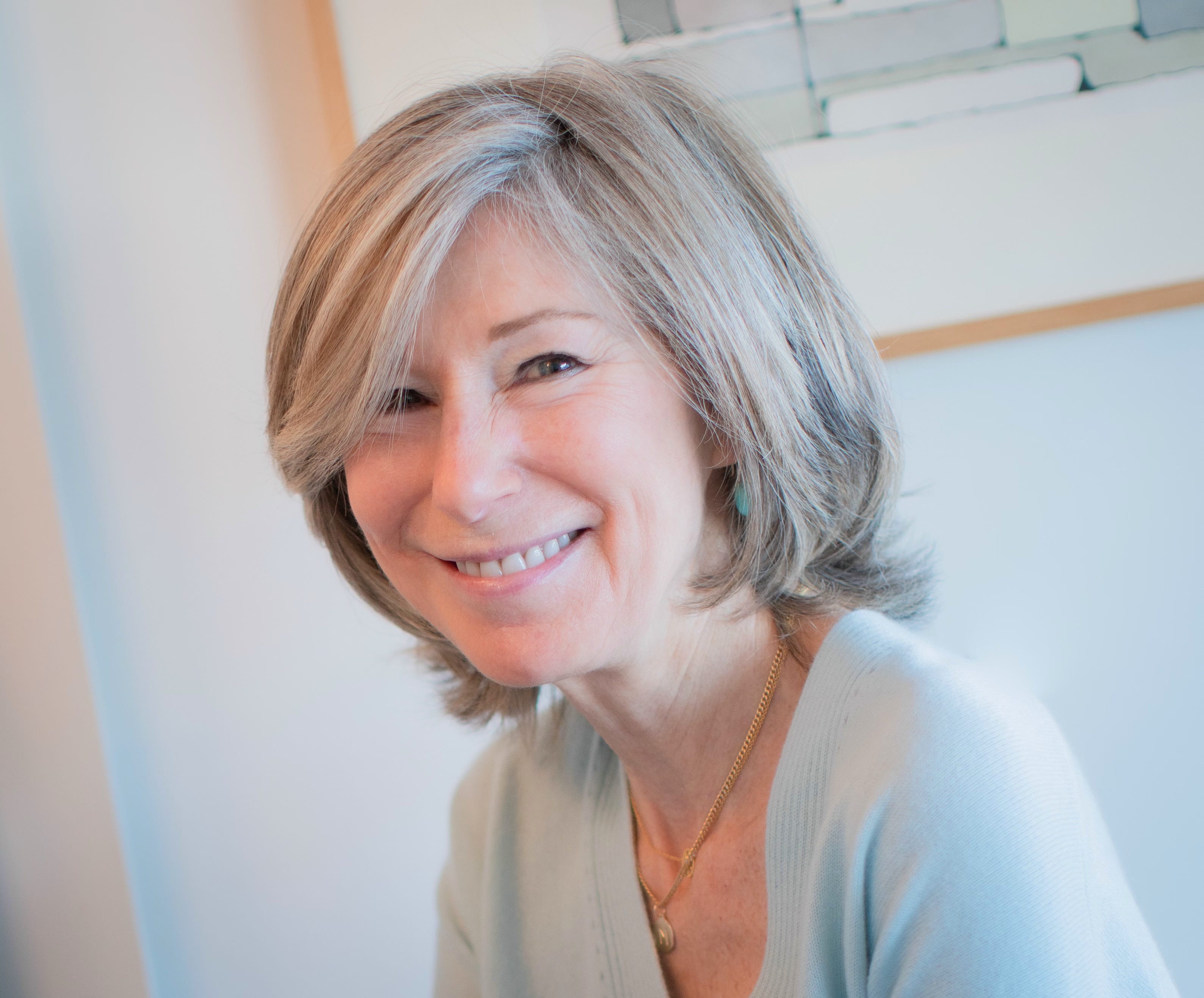
Alexis: You’ve spent decades in the beauty industry; has it shaped your definition of “looking good” as you’ve gotten older? If so, how?
Valerie: I don’t think the two things are related. Being in the beauty industry when I was, and being the oldest beauty editor, I had a very different perspective from most other beauty editors, who were at least 15 years younger than I.
It was a very different experience for me going to beauty editor events, being the oldest person there, and having to listen to and often respond to proposals or PR events involving what we were calling anti-aging products. It was conflictual for me. I always felt that that was a problem, not just the term anti-aging was a problem, because what’s the opposite of aging? It’s not something we really want to think about, right? So, I always kind of had to take the platform that people were presenting with a grain of salt.
Fortunately for me, being at O, The Oprah Magazine, when Oprah was at her apex — she was the goose that laid the golden egg — meant I wasn’t beholden to advertisers in the same way that other beauty editors were. It wasn’t necessary for me to kowtow to advertisers the way other beauty editors had to, which gave me some leeway in terms of what I could promote on the beauty pages. That was different for me, but it was also more challenging, being an older person among beauty editors who were basically all in on the anti-aging narrative and youthful appearance preservation platform.
My thoughts and feelings about my appearance have both become more challenging and, in a way, more useful and helpful as I’ve gotten older. What I’ve noticed is that from 60 to 65, I didn’t really see much change. But from 65 to 70, I noticed a little more. I’m seeing a huge difference between 70 and 75, and I think what’s going to happen as I move, God willing, from 75 to 80 and up, is that it’s going to be even more challenging. I’m going to start to see way more obvious changes in my face, and certainly in my body as well.
So instead of focusing on looking youthful, I’m now trying to focus more on feeling energetic and healthy, and I hope, as I suspect it does, it will manifest in my face and my body.
I think when we see someone who looks more youthful than her age, it’s not because she’s got youthful skin necessarily, or certainly not that she’s had work done, but that she projects a kind of energy that resonates with youth, which involves curiosity. It also involves presence, meaning, taking up space, and being conscious of where you are.
I never thought this was going to happen, but it’s very easy to relax and almost hunch over rather than maintain a ramrod straight posture. So I’m almost always conscious of standing up straight when I’m walking around, and certainly when I’m talking to people.
Another thing is looking people in the eye when you speak to them, which is really, really important because, as you’ve probably heard, often when women are past their reproductive life, we tend to be (or at least feel) invisible, or ignored. And that doesn’t happen in my experience when you stand up tall.
It also helps when you can generate a commanding presence, whatever that means to you. For me, it’s standing up straight, feeling comfortable with the room I’m taking up, and looking people in the eye.
That makes a lot of sense, and I really like your holistic approach. It’s not just about what your face looks like in the mirror.
I think it’s a way of accommodating or adjusting to my realization that the face that I’ve had that’s attracted attention, or that I’ve felt comfortable with, however attractive it’s been, is changing. And to be happy, I’m going to need another approach.
Well, I think you look great, if it matters.
Thank you. But, you know, I realized that it’s important to me to think I look great. And the definition of what looking great is, I think, going to have to change for me in the next 10 years. And so I’m trying to figure out how to accommodate that.
Women in midlife are often told to either “age naturally” or “fix everything.” Do you think those extremes do more harm than good?
When people use the phrase “aging naturally,” I don’t know what that means, because I’m assuming they mean you’re aging without any aesthetic interventions, right? But I don’t know that having an aesthetic intervention is necessarily unnatural. It doesn’t make sense to me unless you’re defining unnatural aging as doing anything to yourself as you get older, which would mean you’re not taking antibiotics if you need them, you’re not using creams, and so on.
When people say aging naturally, I think they don’t know what they’re talking about, bottom line. There are very few people who age completely naturally.
Interventions range from the very minor, like having your teeth whitened, to a facial or eyebrow microblading, to a full facelift. My platform is to just do whatever makes you happy. And here’s why. At some point, in my case, it was very early on, I think I was five years old, I realized I wasn’t going to be here forever. And I realized that the Earth was a ball, spinning around in the air, and the very idea that I had no control over it freaked me out.
Wow, that’s a very young age to have that realization. I think I’ve just figured out that I have no control over most things in the last few years, and I just turned 40.
I think it might have been precipitated by something, like maybe I overheard a Woody Allen movie or something. I don’t know. But I don’t think it’s that uncommon. I have a dear friend who had a very similar experience. But the point is that from the moment we realize that, we’re conscious that it could be lights out at any second, and we have no idea when it’s going to happen.
That’s why I think it’s best to just do whatever gets you through the night. I don’t care what it is. You know, if you want to have another eye put on your forehead, go for it. You want another ear, have the ear put on. Do whatever you need to do, as long as it’s helping you, and as long as you’re doing it for healthy reasons.
I don’t support a woman who might choose to have a facelift because her husband wants her to, but I don’t think it’s a bad thing for women to do whatever kind of aesthetic intervention they believe they need or want, as long as they understand what’s generating their desire.
And they’re doing it for themselves, essentially, is what you’re saying, and not because of some other outside influence. I agree with that.
What’s your stance on Botox?
I do Botox about twice a year, not for my crow’s feet, but to get a little lift to my brow.
Is it best to start that early — in your 30s or early 40s — for the best results?
If a 30-year-old asked me if she should start getting Botox, I would probably tell her no. There are doctors who say that if you do it in your 30s, it prevents your muscles from moving in a way that can cause wrinkles. So if you keep your muscles from doing that, you won’t get wrinkles. But I don’t know that they understand what long-term Botox in the forehead does.
I don’t love that I’m developing lines between my eyebrows (I think it’s called 11 lines), but I’m afraid of needles, ha! So I think I’ll just live with it.
I recently also had a little filler injected in my lip because I had skin cancer on one of my cheeks, so it’s raised one of my lips, and I was trying to get it to be even.
When I wrote about my lip filler, a reader replied that she was really disappointed in me for having it done. I tried to explain, and she laid out the reasons why she was disappointed. It was a very loving response, I have to say. And when I laid out the reasons I had it done, she persisted, and said yes, but you can’t make me believe that there wasn’t some aspect of paternalistic misogyny that pushed you in that direction. I can’t deny that because I was raised in this culture, so could be. But I still think consciousness changes everything. So once you’re conscious of what you’re doing and thoughtful, the outcome of whatever you choose becomes more positive.
This brings me to my next question. You’ve written honestly about cosmetic procedures. How do you personally decide when something is about empowerment versus fear?
I think it’s very hard. One of the big challenges, especially of becoming older in our culture, is that we live in a culture that prizes youth, slenderness, and hypersexuality. The best we can do is ask ourselves what our motives are, what’s driving the desire, and how much we want to think about it.
I have at times recommended to readers that, when they feel disappointed with their appearance for whatever reason, one thing that makes me feel much better is going to a museum. I look at beautiful art, and what happens is it’s as if I somehow imbibe it, or, by osmosis, experience it in a way that makes me feel more beautiful myself.
That’s a great tip, to look outside of yourself. I love going to museums, and I never thought of it that way, but it usually does put me in a better mood.
Or look at photographs of the moon, then at your face. You’re like, well, this is a face, and those are eyes and a nose and a mouth. And isn’t that weird and spectacular that these, these little wet things in the middle of my face, you know, what they allow me to do? Then maybe you don’t care whether you have bags under your eyes or if they’re a little puffy.
Yeah, life’s too short! Is there a cosmetic procedure or beauty choice you regret, or one that surprised you emotionally?
Yes. When I was in my teens in high school, I tweezed my eyebrows too much, and the hair didn’t grow back, so now I’ve had them microbladed. It helps, but I really regret doing that.
Tweezing your eyebrows off must be a rite of passage; I did that, too, in middle school. They were thin and way too far apart.
I remember my mother saying to me, “Oh, my God, what are you doing?”
The only other thing is that I didn’t use sunscreen when I was a youth, and I’ve consequently had two basal cell skin cancers, and I really regret not being more careful. The one thing I always, always tell readers is to wear sunscreen every day.
That’s something I also need to get better at. I live in Amsterdam, so it’s often cloudy and rainy here, but still, I’m trying to be more on it.
The Bioré sunscreen is really affordable. I often recommend it on my Substack. It’s inexpensive, but it’s a very good sunscreen.
I always feel that most sunscreens feel sort of heavy on my face.
It’s light, so try it.
Many women say they feel more invisible as they age. Do you think beauty rituals can sometimes be a way to reclaim visibility?
Well, it’s interesting the way you frame it.
It depends on how you define a beauty ritual, right? If you think that buying an expensive moisturizer will make people notice you more. I don’t think that’s going to work, probably, right?
If you enjoy playing around with cosmetics, discreetly applied makeup can make you look attractive, adding a touch of vividness to your face.
I think if you enjoy wearing a little makeup, it can make you feel like you’re more visible. But as I’ve gotten older, it’s been more and more important to me to be the looker, not the look-ee.
When I decided to be the one looking out and not thinking so much about how I’m presenting to the people looking at me, it opened up an entirely new world for me. It was like walking out of the murk into the daylight, because there is so much to see and so much to experience. I wrote about this here.
I get that. And if you’re focused outward rather than focused on whether your hair looks good, it’s freeing.
The only other thing I have to say about that is that I have a cowlick on the back of my head. Nora Ephron wrote about this. She called it something like her own private Aruba, because Aruba is very windy. I’m really conscious of not walking out with bed head. When a woman is well-presented, and she walks away with this big cowlick, it’s like lipstick on your teeth or toilet paper on your heel or something.
If you had to simplify skincare for women in their late 30s, 40s, and beyond who feel overwhelmed, what truly matters, and what is just marketing noise?
99.9% is marketing noise. On my Substack, I share my skincare routine.
Number one is sun protection. You absolutely always want to wear sunscreen every day unless it’s pouring.
Use a non-soap, gentle cleanser; a drugstore brand is fine.
Something like CeraVe or Cetaphil?
Yeah. Those are great.
I often encourage readers to avoid spending any money on a cleanser because cleansers and the people who make them often suggest they’ve got actives. But you wash it off, so how is that helping? Except for salicylic acid. If you have breakouts or acne, a salicylic acid cleanser is helpful.
A moisturizer, if you need it (a drugstore one is also fine).
I use a prescription retinoid almost every day, but sometimes switch to every other day if my skin gets dry. You can get a fairly gentle prescription retinoid (a vitamin A derivative), which has been proven for over 30 years to help diminish fine lines and wrinkles and build collagen and elastin.
Is it the same as retinol? I’m a bit confused about retinoids versus retinol.
It’s my understanding that retinoid is the word that encompasses the whole family of vitamin A derivatives. So, I think, retinol is a non-prescription retinoid.
I use this CeraVe retinol serum a few times a week (at night). I wonder what the difference would be if I got a prescription retinoid?
A prescription retinoid is likely to help more and faster than an over-the-counter one. But still, over-the-counter retinols are very good now.
OK, so to recap, a non-soap cleanser, moisturizer, sunscreen, and a prescription retinoid or over-the-counter retinol cream.
Yes, and there are various new topicals that look promising, but nothing has the kind of robust research behind it that retinoids have, so I’m just not convinced.
Do you do this routine morning and night? Obviously, no sunscreen when you go to sleep.
When my skin is dry, I just splash water on it in the morning, but I typically wash it with a cleanser. The sunscreen I use is also a moisturizer. At night, I just wash my face, apply moisturizer, and then the retinoid.
What are the most common mistakes that you see women making with their skin, especially in their late 30s through 50s?
Spending too much money on products that offer hope and nothing else.
Ugh, guilty. I’ve learned not to do this, though, because I always revert to my basic routine of CeraVe products.
And then some women, I think, overdo it. I was among those when I was younger. For example, combining things like glycolic acid and a retinoid at the same time. You want to be as gentle with your skin as possible. Also, you can use expensive products, thinking you’re taking good care of your skin, but if you’re not using sunscreen, you might as well just be flushing your money down the toilet.
I not only suggest sunscreen for health reasons, but also to protect against the aesthetic damage the sun does to your skin. If you don’t do any nude sunbathing, take a look at your ass. The skin on your face would look like that if you had protected it from the sun.
On your Substack, you share philosophical and practical advice for anyone who’s ever looked into a mirror. How has your relationship to your own face changed over time?
Well, bottom line, you know, I love my face because I love the person I am.
It’s the only one you’ve got, right?
Yeah. And I’ve worked very hard to be forgiving toward this person who wears this face. So that has helped enormously.
Still, I have mornings when I get up, and I look in the mirror, and I see there’s a dog in the mirror looking back at me. That happened one morning after I saw the Barbie movie. I’d spent two and a half hours looking at Margot Robbie’s perfect face. When I woke up the next morning, and I looked in the mirror, I was so disappointed. But when I thought about it, I realized it must have been because I had stared at that beautiful face for two hours. And I felt disappointed with my very regular kind of face.
Context has so much to do with how we feel about how we look. So we’re really screwed: All day long, we’re getting messages from beauty marketers about how this and that should look, and what a beautiful face is. No wonder we don’t feel good about the way we look. No wonder we feel sad about our faces. I mean, the beauty industry thrives on our yearning and dissatisfaction. And sadness and insecurities.
Yes! Also, with social media in general. It’s so curated. Even beyond looks, just the whole thing. I often delete Instagram from my phone because of how it makes me feel (and the amount of time I waste on it). But of course, I’m guilty of sharing the best snippets of my life too.
Yeah. Very, very, very damaging.
Do you think our culture is getting better or worse about how it talks about aging?
Worse. Maybe there are pockets of improvement because of social media, and then there are loudmouths like me and other women my age who are out there saying, you know, the hell with you. This is what it’s like to be this age. We don’t fit the paradox of what 75 or 80 looks like. So in that way, I think it’s good. There’s more opportunity for platforms with a more positive message.
But in my experience, ageism is still predominant. Again, social media really is fucking people up. I’m working on a piece for Allure that was inspired by a video of Demi Moore looking like a skeleton. I then looked at a few websites and a few influencers who were talking about icons for young women and how they’re all frail and bird-like now. We’re in a bad place once again, where models at fashion shows look like sticks. We’re not headed in a good direction.
If you could give women in midlife one piece of beauty advice — not about products, but about mindset — what would it be?
Again, I would focus on looking outward. Try to take your mind off your appearance as much as possible, because focusing on it will only feel limiting. I also think being curious, present, and open will almost guarantee a happier experience than spending a lot of time just looking in the mirror and trying to figure out how to fix the flaws you see, or the supposed flaws.
Well said. I think this ties into the idea that we should always ask ourselves if we’re doing something because we want to or because we think we should. For me, this applies to everything, not just my physical appearance. I really love your emphasis on mindset. It’s so important!
What’s the most overrated skincare ingredient?
The trendy thing now is exosomes.
I don’t even know what that is, so I looked it up. Readers, in case you’re curious, exosomes are microscopic, nano-sized vesicles or “bubbles” released by cells that serve as essential messengers for intercellular communication.
Basically, exosomes are simply packages that can carry anything. There’s a whole skincare line that’s based on the brilliance of exosomes; it’s just BS, is what it is.
In your opinion, what’s the biggest lie the beauty industry tells women over 40?
I can’t choose one, but if I have to, the whole idea of the fountain of youth would be a good one.
What’s one thing you’ll never do to your face?
Tattoo it. Except, oops, now that I think of it, I have tattooed my face, as my eyebrows are microbladed. But it’s very, very subtle.
And before we wrap up, what are you reading, watching, eating, etc., these days?
I’m in Tokyo right now and don’t have a VPN, so what I can watch is fairly limited, but I’m rewatching The Crown. Which I’m just loving, and especially John Lithgow playing Winston Churchill.
The last book I finished was Strangers by Belle Burden.
Did you enjoy it?
I did, but I have questions about it. She’s a good writer, and it was very honest and open, but I just don't understand how she saw nothing. You know what I mean?
Yeah, I read her NYT Modern Love piece, and then I read a review about the book. The book’s on my list, but I was also wondering how there were zero signs…
I would love to hear what he (the husband) has to say about it. Although when I mentioned that to a friend of mine, she told me about two of her friends who had basically the same experience.
I actually read something about it on Psychology Today. Apparently, there’s a phenomenon called Wife Abandonment Syndrome. Not sure what I think about that…
And sorry I interrupted you, you were going to tell me what you’re eating in Tokyo.
A lot of sushi.
I bet it’s very good there, too.
Yeah, and it’s inexpensive!
Thank you, Val! Your perspective feels especially refreshing in a culture that profits from making women feel bad about their faces. If there’s a takeaway here, it’s that aging well has a lot less to do with chasing perfection and a lot more to do with presence, curiosity, and self-awareness.
Thanks for reading, and take care!
Alexis
P.S. If you found this post interesting, make sure to subscribe to Val’s Substack, How Not to F*ck Up Your Face, and hit the ♡ button below to help others find this post (and so I know what’s resonating).
Loved this piece. Valerie’s opinions and updates? Yes please. I miss hearing them. ❤️
I agreed with basically everything – I’m 43, used to be obsessed with beauty products, and was a longtime Oprah magazine subscriber.
As I’ve gotten older I’ve taken a more natural approach across the board – skin products, makeup, all of it. Cetaphil. Salicylic acid when needed. That’s it. I now pass on the serums that cost hundreds of dollars and are on your face for all of thirty seconds.
This article was like a little hug this morning. For me and my face.
P.S. Glad you’re doing well, Valerie!
Thanks, Alexis! Just to make it clear: I do not believe the earth is a ball spinning around in the air. But...you know what I mean (I hope!). x