


Hello, hello!
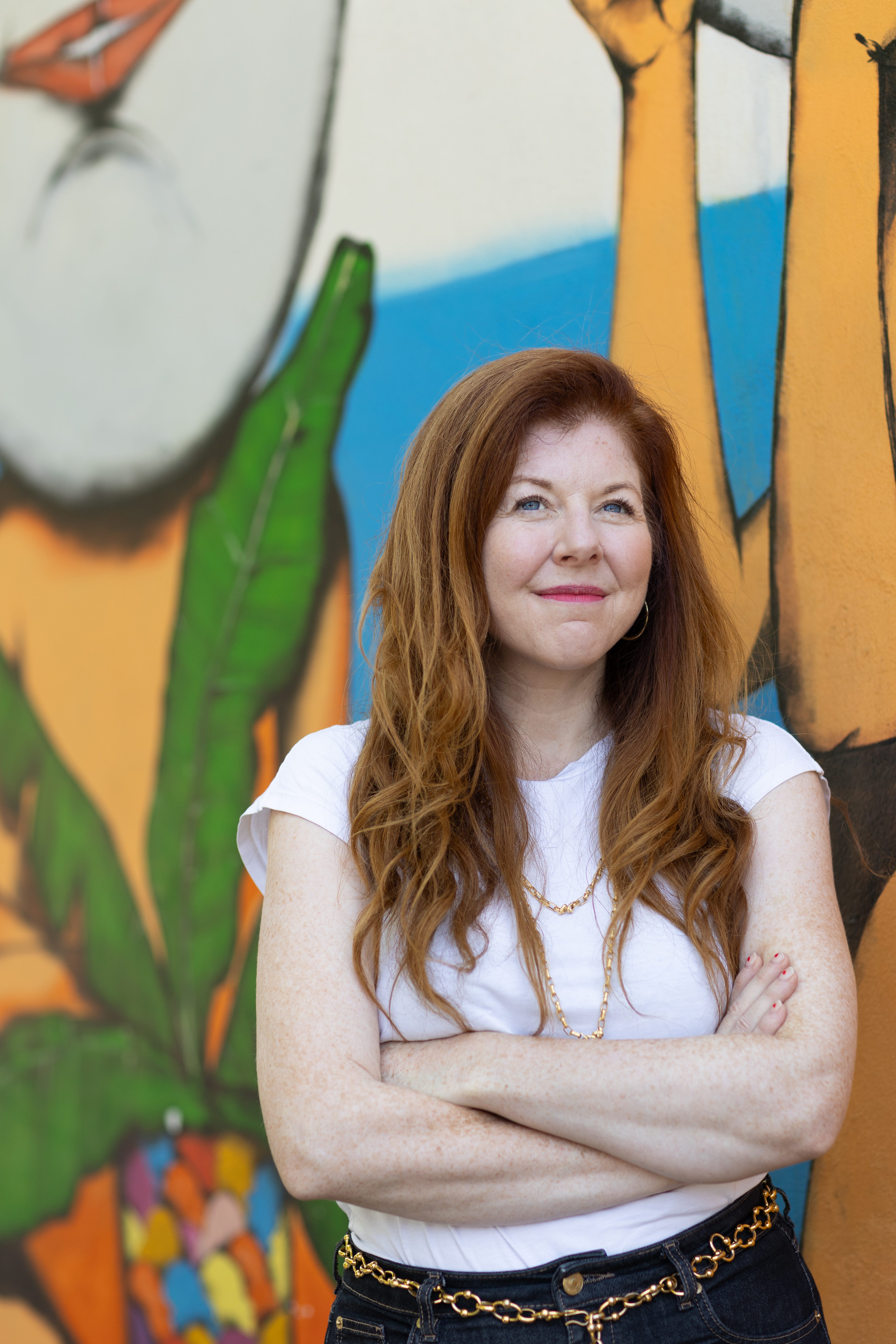
I’m fangirling a bit right now because I got to interview an author I admire. I discovered Marianne Power here on Substack and subsequently plowed through both of her books in the same week. She’s raw, honest, and funny — all qualities I appreciate in a writer and author (in humans in general!).
She thought, like many of us, that if you just read the books, heal your attachment style, fix your mindset, wake up earlier, try harder, and so on, you’re guaranteed to experience a transformation.
For a year, Marianne followed the instructions of the self-help industry to a T — from budgeting spreadsheets to confidence boot camps, stand-up comedy, and skydiving, all in pursuit of becoming “better.” The experiment became her bestselling memoir, Help Me!.
In her follow-up, Love Me!, she asks another question: what happens when we treat romantic love the same way we treat other projects, as another thing to optimize?
In this conversation, we talk about dating in the age of therapy-speak, burnout disguised as empowerment, the pressure to be healed before being loved, and realizing that we’re not actually broken, we just believe we are. We are good enough.
Enjoy!
After immersing yourself in extreme self-help for Help Me!, what belief about “fixing yourself” did you have to actively unlearn?
In many ways, I think it’s admirable to want to improve ourselves, to address our weaknesses, and to stretch ourselves to do better. But I look back now and see how much my self-help project was driven by a feeling of being broken, and that makes me sad. I was never broken, and I did not need to be fixed. I can also see more clearly now that I was the product of a world where women are constantly told they are not good enough, not thin enough, rich enough, pretty enough, kind enough, successful enough. Again, that makes me sad. I was always good enough, and so is anyone reading this. That said, I am also very proud of what I did, what I learned, and the book that resulted.
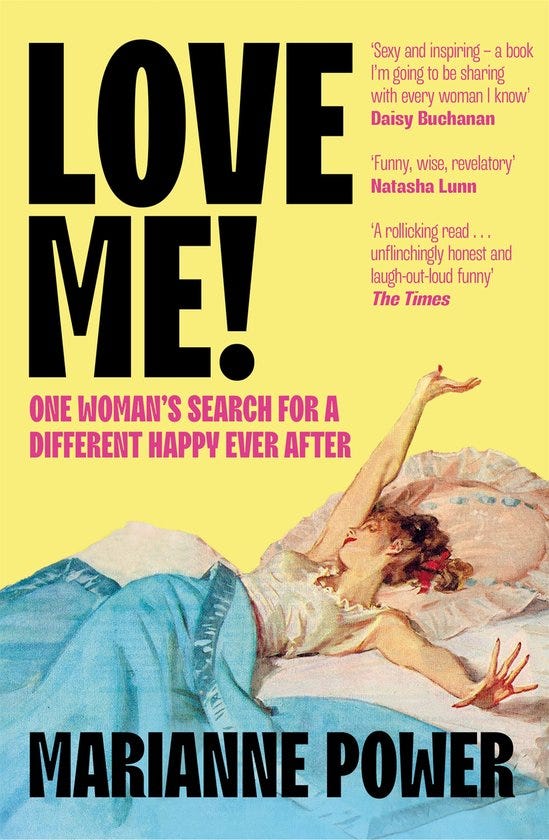
In Love Me!, you explore romantic love as a kind of self-help project. Do you think modern dating has become another form of personal optimization? If so, at what cost? Or, in other words, has modern dating culture turned love into something we have to earn through healing and self-optimization rather than mutual effort?
There is so much awareness now — of red flags, attachment styles, trauma responses — that sometimes we risk pathologising ourselves out of relationships or just fun. We can become so fluent in the language of therapy that we forget how to simply enjoy each other. It’s also easy to ascribe bad motives to someone who is, in fact, just a flawed human being — like us.
I don’t believe we have to have all our shit together in order to be loved. Love is not a prize for someone who has read all the books and done all the therapy, and I have read all the books and done all the therapy!! Ha!
At the same time, self-understanding matters. It really helps to know yourself well enough to explain yourself — where your weak points might be, where your crazy can show up, and also what you really need.
For example, I need a lot of space. I know that now. Instead of trying to override it — by overgiving or squeezing myself into someone else’s idea of what a girlfriend or friend should be, I can say it out loud. I can explain that I am someone who needs a lot of time alone, and it’s not because I don’t like the other person. Not at all. It saves a lot of hurt and confusion when I can just say this. But it took me until my forties to understand that this was a real need, and that I was allowed to voice it.
Yes, I couldn’t agree more! I am just now (at 40) feeling like I’ve finally figured out how to understand and clearly articulate my needs without losing my shit.
A little self-awareness, held lightly and with humour, goes a long way. So does finding people who genuinely want to hear what life feels like for you, and repaying them by wanting to hear what life feels like for them.
We are all flawed and worthy of love. Few of us were given great examples of how to do this. We’re taught equations and history, but not how to have difficult conversations, ask for what we want, or repair after conflict. These are essential skills. And I’m glad that we live in a time when we can now learn these skills. But it would help us to realise that we will always get things wrong, and that’s OK too.
Yes, a little self-compassion goes a long way. You spent a year reading self-help books that promise transformation. How do you now tell the difference between genuine growth and performative self-improvement?
There can be a lot of performative wisdom on social media — many of us aren’t living by the quotes we share online. I am certainly guilty of it. I think we know deep down when we are pretending. In my experience, real growth often happens at the times when I feel least together, when everything seems to be falling apart. That is when messy, real change is happening.
I often don’t see that growth at the time — I usually feel like I’m failing. It’s months later that I can see, wow, you have changed from that. You learned a lot. That said, the buzz of going for a walk or meditating regularly does not need to cause a big disruption. It can improve our lives in gentle ways. I have always been an all-or-nothing person. I would like to learn to go more gently, to do the small things that build a better life, to eat well, exercise, meditate, enjoy friends and nature, and sleep well.
I love how you frame it as going more gently. I think we have different seasons in life, and I’m entering the more gentle one, too. Or, at least trying.
Self-help often places the entire responsibility on the individual. Where do you think that narrative fails to account for trauma, luck, privilege, or timing?
Absolutely, it does. Some of us were brought up with great advantages that others never had. I grew up in a stable family, I went to private school, and I never once had to worry about being fed. I was never sexually or physically abused. I went to university. I had so many advantages that enabled me to do what I have done. Yes, I applied personal effort, but the reason I could make those efforts was because of all the support I already had. We are not all starting from the same place, and it feels cruel not to acknowledge that.
Was there a moment during your reporting where you realized self-help had become another pressure rather than a relief? What did that feel like in your body, not just your mind?
About 10 months in, I felt like I was having a breakdown. I felt like a computer crashing, my head was spinning, and my thoughts were loud and urgent. I felt the more I tried to improve myself, the more aware I was of all my flaws. The more perfect I tried to be, the worse I felt. I was putting myself under such extreme pressure to do new things, and I was not giving myself time to rest or integrate. I kept telling myself I wasn’t doing enough, even though I was (literally) jumping out of planes, doing stand-up comedy, and chatting up strangers! It was madness. I stopped sleeping and was also crying a lot. I now see that when I get into that urgent feeling that I’m not doing enough, I need to do less, not more.
That’s a great learning. I have that as well, where I spiral out and get obsessed with doing or achieving something. I’ve learned to tone it down as I get older, but it’s still a struggle that often keeps me up at night.
Both your books blend humor with vulnerability. Do you see humor as a defense mechanism, a truth-telling tool, or something else entirely?
I am Irish, and humour is a very important part of how we communicate. I am so glad for my humour. It allows me to take big, deep questions and to make them light enough for people to enjoy.
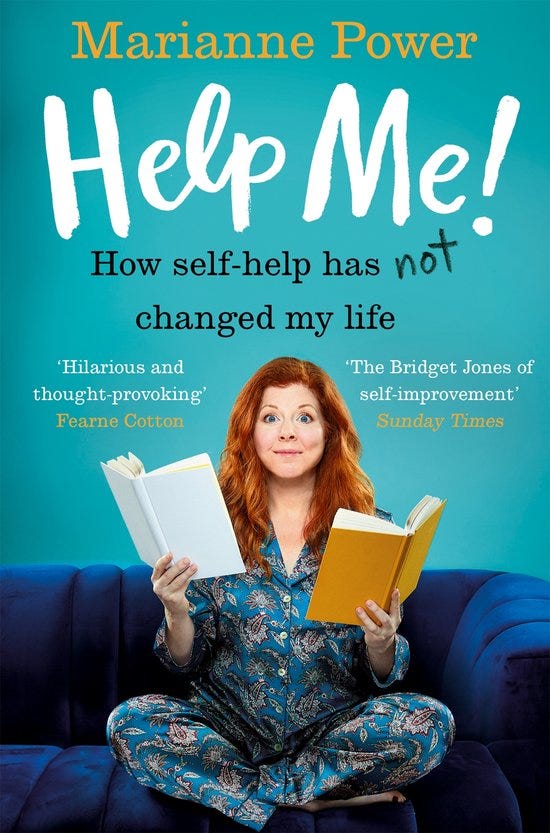
If someone read Help Me! or Love Me! and felt worse (i.e., more aware of their flaws or more behind), what would you want to say to them?
Both books can be confronting and uncomfortable to read, especially if you relate to my struggles. They can feel like a mirror. I have heard from several people who could not read the money chapter in Help Me! because it was too close to their situation, or those who read it and felt angry at me for being so irresponsible. I also have a friend who wants to shake me because she wishes I would just get on with things and stop analysing everything. All of those reactions are fair. I think anything that makes us think and reflect on ourselves has value, and both books try to do that.
How has writing honestly about your own messiness changed the way you now approach intimacy, both romantic and platonic?
I am a pretty open book, and I am very lucky to be surrounded by people who live in a similar way. I have been relieved and moved by how much people relate to my insecurities around love and sex. A friend from university emailed me to say it was like reading about herself. She is married and was the girl all the guys wanted at university. She was never single, while I was always single. I thought our lives were completely different, but they were not. No matter how things look on the outside, many of us have hang-ups around sex and self-worth. So I would say the way I write — very openly — has helped me to be very open with others in the real world, and for them to be open with me. I don’t imagine anyone feels like I will judge them because I have been so open with many of my flaws and struggles.
I agree so much with this! I haven’t written about sex, but I have shared other personal stories, and it has led to deeper conversations and connections with people I’ve known a long time, and with readers! It’s scary to be vulnerable, but more rewarding than I ever imagined.
Do you think the self-help industry benefits from keeping people in a constant state of “almost better”? Why or why not?
Yes, I do. That can even be part of the appeal. If we are almost there, we never have to fully engage in life as our flawed, gorgeous selves. It becomes a way of putting life off, which is less scary than showing up and really trying right now, as we are.
If you were to write a third book, what human experience do you think we’re still trying (and failing) to solve with advice instead of acceptance?
My next book will be about money. I think money and our ideas of success are fascinating. I believed I needed to be successful to be a worthwhile human. I became successful, but it never felt like I was. Then I burned out and got long Covid. I am now in debt, and I feel a lot of shame about that. But why? Why such shame? We live in a very expensive world that requires us to earn a lot just to stay alive. Animals do not have to pay to exist. We are also seeing how horrendously rich people can behave.
So, can self-worth be found through money and success?
I don’t think so… not for long at least. I keep thinking about the line by Henry David Thoreau, “I make myself rich by making my wants few.” I would like to embrace the idea that we do not need much to be happy. A roof, some food, and some love can be enough. I am trying to unlearn the other narrative that says I need the designer wardrobe and the big house. The people I know with big houses often seem very stressed by them.
We’re on the same page. I recently read an entry in The Daily Stoic that essentially said that the enemy of happiness is yearning for more, better, someday. I should tape it to my bathroom mirror because, as you said, we don’t need much to be happy.
Thank you for reading, and see you soon!
Alexis
P.S. Marianne has kindly agreed to answer your questions in the comments, so don’t be shy!
P.P.S. To keep in touch with Marianne, subscribe to her Help Me! Newsletter, follow her on Instagram, and buy her books!
Mera Magazine is reader-supported, and I appreciate your readership alone, but if you’d like to further support my independent writing and journalism, consider upgrading your subscription. Thank you so much.
I so enjoyed reading this as I'm a huge fan of Marianne's writing and her books taught me a lot, despite being old enough to be her mother!