


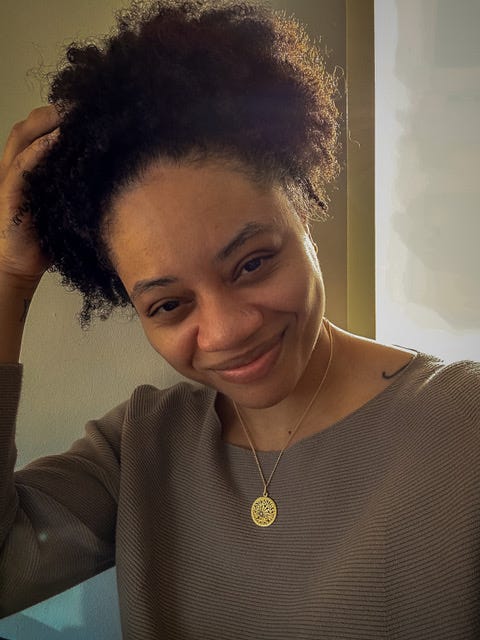
Samantha King Holmes is a poet, author, and photographer living in New York.
She started writing at the young age of 11 during a difficult time in her life. It helped her work through her feelings and became a form of therapy. All this is evident in Samantha’s writing. She’s raw, honest, and deep, and I love it.
I discovered her sometime last year on Substack and have been enjoying her latest collection of poetry, Meet Me Halfway, which explores the journey back to yourself after divorce.
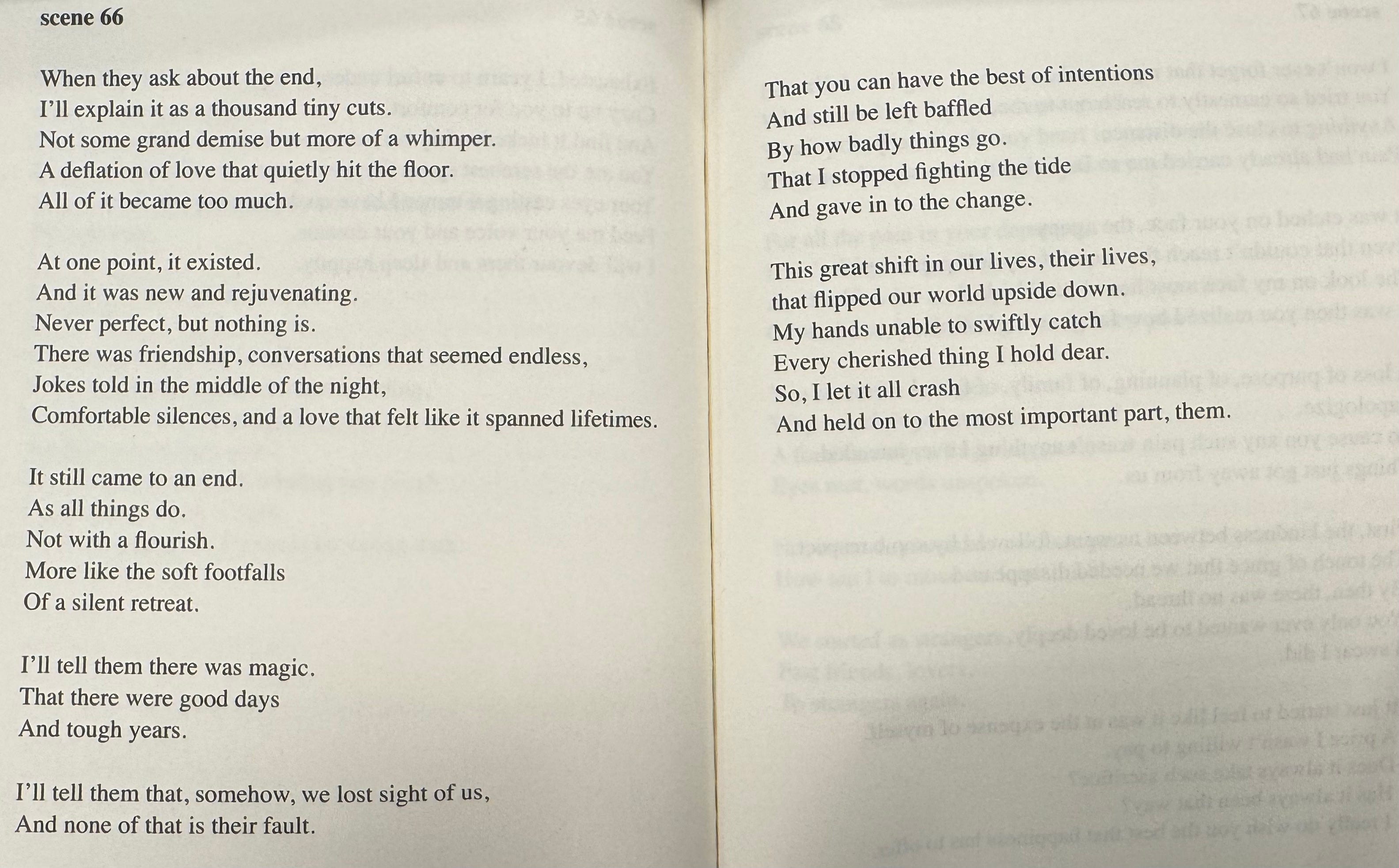
I’m new to reading poetry, but since interviewing Samantha, I feel inspired to try writing poetry too. I can see how it’s a great way to work through tough experiences and emotions.
In this Q&A, Samantha shares how she overcomes the fear that so many of us writers feel when putting work out into the world, details of her publishing journey and how she markets herself, what inspires her writing, and much more.
Happy reading,
Alexis
ALEXIS: Can you share how your journey as a writer began? Was there a particular moment or experience that made you realize writing was your calling?
SAMANTHA: The earliest memory I have of writing is from the fifth grade. We had a writing assignment—though I can’t recall the exact topic—and when the vice principal visited our class, my teacher asked me to read my paper aloud. He didn’t seem particularly interested, but the look on my teacher’s face is something I’ll never forget. She was beaming with pride, fully immersed in every word I had written. It was the first time I ever felt an adult was genuinely impressed by something I’d done. She believed in me as if she had discovered a hidden talent no one else had noticed.
“It was the first time I ever felt an adult was genuinely impressed by something I’d done. She believed in me as if she had discovered a hidden talent no one else had noticed.”
She went on to recommend me for honors classes, which ultimately changed the course of my academic journey. It was one of those rare moments growing up when someone saw something in me that I hadn’t yet seen in myself.
I didn’t start writing consistently until the following year, when I entered middle school. A lot was happening in my personal life, and I didn’t feel like I had anyone to talk to. So, I turned to journaling. That eventually led me to write songs, which over time evolved into poetry. Somehow, my aspirations shifted—from wanting to be a singer to becoming a songwriter, and eventually, an author.
I can’t pinpoint a specific moment when I realized writing was my calling. I wrote then, and still write now, for myself. It’s how I process life and make sense of my emotions. The fact that my friends enjoyed my writing or felt touched by my words meant the world to me. It was a way to communicate with them when words failed me in person.
I didn’t view my writing as a service to others until I was older. I just knew it had an impact on people, and because it came naturally to me, I felt it was something I was meant to do.
ALEXIS: What does your writing routine look like? Do you have any rituals or habits that help you get into the creative flow?
SAMANTHA: I wouldn’t say I have a set routine. I’m working on being more disciplined with my writing schedule, but with two little ones and co-parenting with my ex, sticking to a routine isn’t always easy. I’m still figuring out the balance.
When it comes to getting into a flow, I rely on a playlist I created. It’s made up of songs that gradually increase in Hz frequency, leading up to a certain point. After that, I have a selection of instrumental tracks, and I pick one that matches my mood, putting it on repeat until I’m done writing. I’m listening to it as I write this.
ALEXIS: Where do you draw your inspiration from? Are there specific themes or emotions you feel most drawn to exploring in your work?
SAMANTHA: I generally draw inspiration from my own life or the lives of people I know. But really, anything that stirs an emotional response in me can spark something, whether it’s a scene in a show or movie, a piece of art, or simply observing the world around me when I’m out and about.
The theme I used to feel most drawn to was love. I think that stemmed from my childhood, from not feeling loved in the way I needed, so I was drawn to it as if understanding it could somehow make everything in my life better. In a way, that’s true, but I misunderstood what kind of love does that. Over time, I’ve come to realize that internal love is the most important kind. External love can be healing, don’t get me wrong, but so much of how we feel about ourselves shapes how we interact with the world. All of our experiences are colored through that lens.
I grew up with this romantic mindset as if love would save me. But now, I’d say the theme I’m most drawn to is life itself. I know that sounds broad, but I’ve written about trauma, the mundane, my kids, and observations of the world around me. It all fascinates me. Life feels like it has so much to cover, and I want to explore it all through my writing.
That said, I still love love—and I still write about it.
“Life feels like it has so much to cover, and I want to explore it all through my writing.”
ALEXIS: What’s the biggest challenge you face as a writer, and how do you overcome it?
SAMANTHA: The biggest challenge I face as a writer is the same one I think many of us face: fear. Fear keeps me from starting. It makes me doubt myself, leaving poems unfinished. It’s the reason I’ve written entire newsletters and never hit publish. Fear holds me back from being more disciplined because if I fully commit, then I have something to lose.
At its core, fear is what fuels procrastination, excuses, and the tendency not to try—because if I give my all and it doesn’t work out the way I hoped, I’m left vulnerable in a way that nothing else exposes. That’s really what it comes down to: the vulnerability. Writing demands a level of openness that feels like there’s so much to lose. Some people have read my newsletter and know me more intimately than people in my real life. They see me clearly, sometimes more clearly than I see myself.
But I push publish anyway, to overcome my fear. I make myself sit with the poem that feels hard to finish. I write out what I’m actually thinking instead of cowering from my thoughts. I face what I’m afraid of so I can see that it’s not as bad as it feels—and even if it is, I know I’ll get through it.
Sometimes fear still wins. But when it does, I give myself grace and remind myself that I’ll try again another day.
ALEXIS: Can you walk us through your publishing journey? Did you start independently or traditionally, and what made you choose that path?
SAMANTHA: My publishing journey has been an interesting one. The first book I published was with a small indie publishing house that was just starting. It was a collaboration with my partner at the time. Eventually, the indie publisher shut down, but that experience set the foundation for what came next.
I found my way to my current publishing house and editor through my former partner. She (my editor) reviewed the poetry I had shared publicly and fought for me to get a contract. I’ve been with them for almost ten years now.
I’m fortunate to say that my path has been shaped by people who believed in me enough to mention my name in spaces where they felt it belonged.
ALEXIS: How have you approached marketing your work and connecting with your audience? Has Substack played a significant role in this?
SAMANTHA: For the majority of my career, Instagram has been my main platform for marketing and engaging with my audience. It’s where a lot of people discover my work and reach out to me, and it continues to be the primary space for both. I do my best to create content that resonates with my audience, and over the years, I’ve adapted my approach to keep up with changing trends and to keep things fresh. I actually enjoy that part of it—the opportunity to flex my creative muscles, experiment, and see what works and what could be improved.
I respond to my audience as much as I can, whether through comments or messages. Some people have been with me for years, and we’ve built a wonderful rapport. They’re incredibly supportive, often checking in when they sense a shift happening in my life.
I’m relatively new to Substack, so it hasn’t played a significant role just yet, but it’s growing. It’s been amazing to see how many people have discovered my work through this platform and how many have migrated from Instagram to support me here as well. Substack feels like a more intimate experience. What it’s really given me is a community of writers who genuinely care about my well-being. I’ve never had that kind of camaraderie before, and it’s been meaningful to see so many writers share their struggles honestly while still offering encouragement.
ALEXIS: Do you often collaborate with an editor? How does that dynamic influence your creative process, and what do you love most about working together?
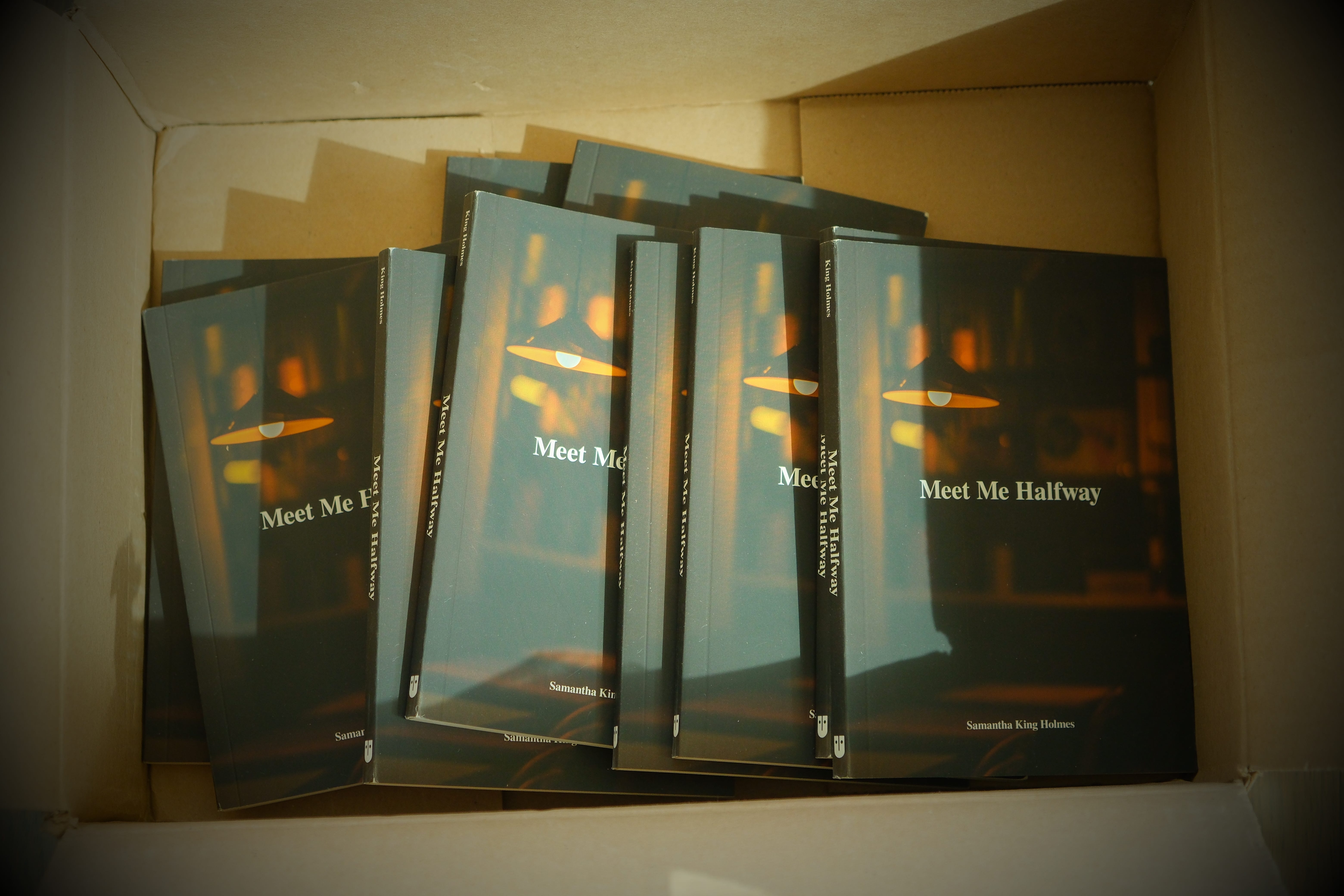
SAMANTHA: I don’t often collaborate closely with my editor. She knows that my process is typically a solitary one, and when I’m ready to present something to her, I do. With my latest book, Meet Me Halfway, I wanted it to be more of a collaborative experience, but it didn’t work out the way I had hoped for various reasons. However, we did work together extensively, and I’m grateful for that, especially since she’s retiring this year, making it the last book we’ll have worked on together.
What I love most about working with Patty is her honesty. I write for myself and for my audience, but I also strive to impress my editor. Her opinion of my work matters deeply to me. She called my last book “perfect,” and I couldn’t have been happier because I poured so much of myself into it. I worked really hard to make it my best work to date, and hearing that from her made me feel like it all paid off.
ALEXIS: What advice would you give to someone who wants to write their first book or start sharing their work publicly?
SAMANTHA: The advice I’d give to someone who wants to write their first book is to write a poem every day. It doesn’t have to be great—or even good. The goal is to build the habit of writing consistently. Treating it with discipline will serve you better in the long run than waiting for sudden bursts of inspiration. Plus, it will give you a wealth of material to choose from when it’s time to shape your book.
When it comes to sharing your work publicly, I’d recommend keeping a separate notes folder or notebook for that purpose. Your public pieces don’t have to mirror your private writing exactly. It’s also helpful to compile a solid amount of content ahead of time so you’re not constantly stretching yourself thin trying to create new material for whichever platform you choose to share on.
ALEXIS: How do you feel your writing has evolved? Are there particular lessons or shifts in perspective that have shaped your work?
SAMANTHA: I feel like my writing has gained more structure over time. I’ve tried to lean into a style that feels like I’m speaking directly to my audience, but I’ve found that the pieces they connect with the most are the ones I write to myself and for myself. I haven’t quite figured out what it is about those pieces that creates such a strong connection, but I’ve learned I should lean in that direction.
One perspective that really shaped my work is thinking of stanzas as different rooms. They all exist within the same house, and essentially, I’m guiding the reader from room to room. I love storytelling and imagery, and I feel this mindset has influenced the flow of my poetry in meaningful ways.
Another important part of my process is giving pieces time to breathe. Coming back to them with fresh eyes—whether it’s days or even months later—makes a big difference. Something I thought was wonderful one month might feel different when I revisit it. Seeing if a piece can stand the test of time is important to me.
Editing, while strenuous, is pivotal. I try to do as much as I can before sending my work to the publisher, but there’s always a chance something slips through the cracks. Having someone else review it not only offers a fresh perspective but also helps catch things I might’ve missed.
ALEXIS: Can you share what’s next for you? Are there any upcoming projects or books you’re excited about that readers should know about?
SAMANTHA: I’m in that beautiful, terrifying space of not knowing what comes next. With my editor retiring, I’ve been handed off to another editor. Thankfully, I know her, but we haven’t worked together enough yet for me to have a sense of our dynamic.
The only thing I know for certain is that I’ll continue writing here on Substack and sharing my work on Instagram. I hope to explore these spaces in new ways, finding fresh approaches to connect with my audience and express my work differently than I have before.
ALEXIS: Anything else you’d like to add?
SAMANTHA: This is the first time someone has interviewed me, so it’s been both exciting and terrifying. It’s strange to find it challenging to write about myself this way, especially since I share so much of my life through my poetry. But I suppose poetry has always been my safe space because of its ambiguity.
So, thank you for choosing me. I really appreciate it. I enjoy finding moments where I can push myself, and now I get to add this experience to that list.
Great interview! My favorite part was Samantha’s story about her interaction with the vice principal in 5th grade. Such a good reminder about how a positive interaction or a bit of encouragement with a young kid can really change their life. Also, Samantha’s playlist strategy sounds amazing and I am going to try to figure out something similar!
Wonderful interview, Samantha and Alexis. I'm not a poet, but the stanzas as rooms concept really struck a chord. I can see how that could be quietly powerful for many types of writing.