



Welcome to Second Half… an interview series exploring how people of all ages are thinking about the second half of their lives. This week, I’d like to introduce you to Dina Gachman, a Texas-based journalist, writer, and the author of So Sorry For Your Loss.
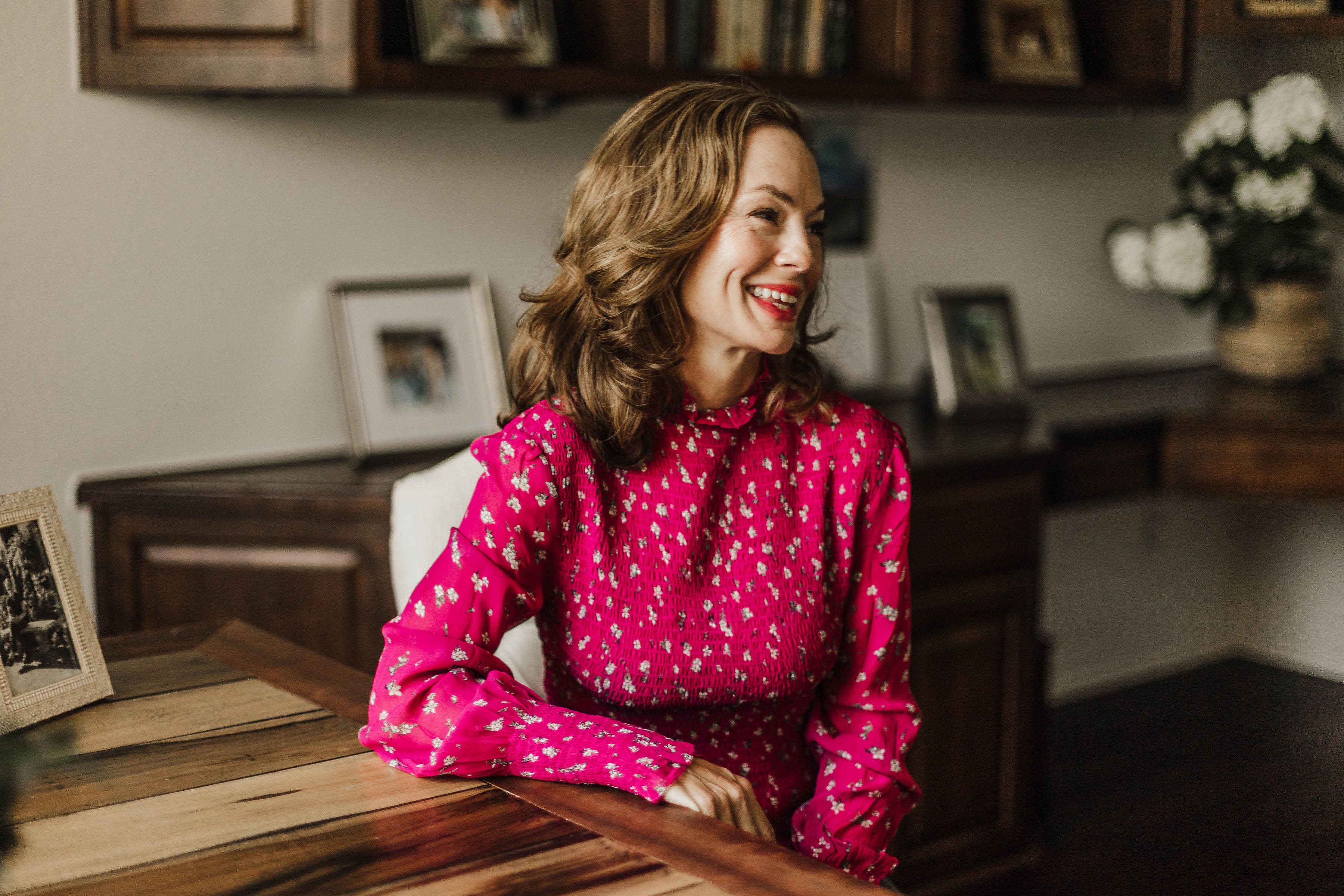
Full name: Dina Gachman
Age: 52
Location: Hutto, Texas
Relationship status: Married
Hobbies: Reading, hiking, cooking
Personal or side projects: Mostly freelancing and ghostwriting; no time for side projects!
Kids: I have an 8-year-old son and had him late via IVF since I met my husband “late” in life.
Who are you, and what should we know about you right off the bat?
I’m a Texas-based journalist and author and a frequent contributor to the New York Times, Texas Monthly, Slate, and more. I focus on lifestyle, culture, and entertainment, both essays and reported pieces. I’ve written two books of essays. My most recent, So Sorry For Your Loss, was called “a poignant, personal exploration of grief” by Publishers Weekly. I’ve been ghostwriting celebrity books for close to ten years as well.
Is there a part of yourself that you’re hoping to rediscover in your second half of life?
I would love to find my connection to music again; it was so important to me growing up, and in my 20s and 30s. My first dream was to write novels, so I’d love to pump the brakes on ghostwriting at some point and write fiction.
What do you care less about now than you did 10 to 20 years ago?
Being “cool” or seeming cool. I am so not cool to my son (ha), and I find it funny. I’m not concerned with liking a song someone else thinks is lame, for example. I’m not going to start dying my hair purple and wearing muumuus, but I’m comfortable in who I am and what I’m into. I always tell my son, “I’d rather be weird than boring.” It’s our little mantra.
What do you care more about now than you did 10 to 20 years ago?
Health, and getting screened and checked for anything I can. After losing my mom to colon cancer, I’m not messing around with that stuff. I hate that I smoked in the 90s, but we were so “whatever” about so many things then.
When you imagine a good life at 50, 60, 70, or 80, what does it look and feel like?
Being healthy and strong, pitching and writing things I’m excited about, having lots of time to read books, going to museums and movies and enjoying NOT working my ass off. :)
Watching my son grow up and traveling with my husband. Living somewhere that’s in nature, but that does not require me to do a lot of yard work since right now I weed, mow, and trim trees. I’ll be over all that when I’m 60, 70, and 80.
Have any major losses, disappointments, or life transitions changed how you think about your second half?
Losing my mom and sister for sure. It does make you conscious of the fact that the time we have isn’t a given. It’s hard to live in the moment all the time, but those losses make me grateful for what I have, and I know that when I get close to my late 60s, which is when my mom died, it will feel strange. It also shifted my opinion of what “old” is. In my 20s and 30s, your 70s was old. Now I see the 70s as not young, but not old. My sister was 40 when she died, so I hate thinking she didn’t get a second half.
What are you no longer willing to postpone?
Medical checkups! Telling someone I love them. Travel, writing about something that fascinates me. I also take a yearly trip with my friends from college, and that’s a key in life. We started the trips right after my mom died, and we would never postpone our time together. It’s crucial.
What role do work, achievement, or ambition play in your life today compared to earlier chapters?
I’m less anxious and more at ease in my work now. My 20s and 30s were such a struggle, and I was all over the place, trying to find my way. I waited tables, had crap corporate jobs. It wasn’t until my 40s that I could say I’m a professional writer. I’m less scared to pitch certain publications, or go out with a crazy idea. It’s way easier to brush off a rejection too. In the actual process of writing, I’m more confident for sure. I still have panic moments, but I know I can get through them. I’m less ambitious about driving myself into the ground to be “the best.” I’d love to write more books, but I’m also ok easing up and enjoying my life.
What have you learned about happiness that your younger self wouldn’t have understood?
That it doesn’t necessarily come from the explosive, dramatic moments. I used to think living in a big city and having a “big” life was what would make me happy. Now I live in a small Texas town on 8 acres of land, and I find happiness in my son, my family, and checking our wildlife camera to see what was out there in the night. My younger self would be totally shocked by all of this. That self figured I’d be living in Paris and being the next Anaïs Nin.
If the second half of life has a theme or guiding principle for you, what would it be?
Go easy on yourself, and hug the people you love. I guess the theme would be ease, but that does not mean easy.
What does growing older mean to you now?
Settling into a face or body you might not recognize, but that you need to accept and even love. Taking care of yourself, staying youthful for my son. It means not surrendering to the fact that in the eyes of society, your age means you’re not as relevant as a 20-year-old influencer.
What are you still trying to figure out?
How to age gracefully. Meaning, not agonize about it. If anyone has a secret, please let me know! But I do remind myself I am lucky as hell to have this day, this moment. My sister lost a friend, a young mom with four kids in her 30s. When I start griping about getting older, I remind myself how lucky I am to be here now. Lucky to have the wrinkles.
What belief about life have you changed your mind about?
That it’s fair. Losing my mom and sister made that pretty clear. I miss them every day, but I don’t let that ache ruin my days.
What are you trying to say “yes” to more these days?
Writing something that might scare me or intimidate me. Pitching places that might seem impossible. The first time I got a yes from the New York Times Magazine, I remember being so thrilled, but then my immediate thought was, “Oh shit.” It was so intimidating, but that was part of the thrill.
What are you trying to say “no” to more these days?
Things I don’t want to write, and ghostwriting projects. I’m not doing a good job with the latter, and I need to get better at that. The money is great, but as I get older I’m not as excited by it, and I find myself wishing I could put that time into my own book.
What are you learning to let go of?
Hateful comments, people who have their own issues. I don’t let it bother me as much.
What feels more urgent now than it did ten years ago?
Loving the people in my life and expressing that love (my dog included). Spending time with my dad and sisters, giving my son time with his cousins and grandparents. When my mom died, it became imperative that I see my sisters and dad more.
What would make you look back and think, “I used my time well”?
That I’m surrounded by family and friends, meaning I spent time with people I care about. That I feel proud of the work I’ve left behind.
What do you hope people remember about you when you’re gone?
That I was kind. I always tell my kid that’s the most important thing. You don’t want to be the one people remember as the jerk in high school.
Big thanks to Dina for taking the time to answer my questions, and as always, thanks for reading! Leave a comment or question for her below, and find her on Instagram and Substack. 💬
P.S. If you’d like to participate in my Second Half series, fill out this form. The more the merrier! You can also answer it anonymously if you prefer.

Thank you again, Dina! Loved learning more about you. Cheers to keeping it weird! 🍻
Thanks for sharing a bit of yourself with us, Dina! It's inspiring to hear from these women in the middle of their lives, still not having their shit figured out or are starting over from scratch.