


Welcome to Project Second Half… an interview series exploring how people of all ages are thinking about—and choosing to live—the second half of life. PSH celebrates getting older, saying no to the bullshit that no longer serves us, and saying yes to the things we’ve put off—or that may once have felt unacceptable, unconventional, or simply not meant for us.
This week, I’d like to introduce you to Sinéad Connolly, an Irish writer based in Sydney.
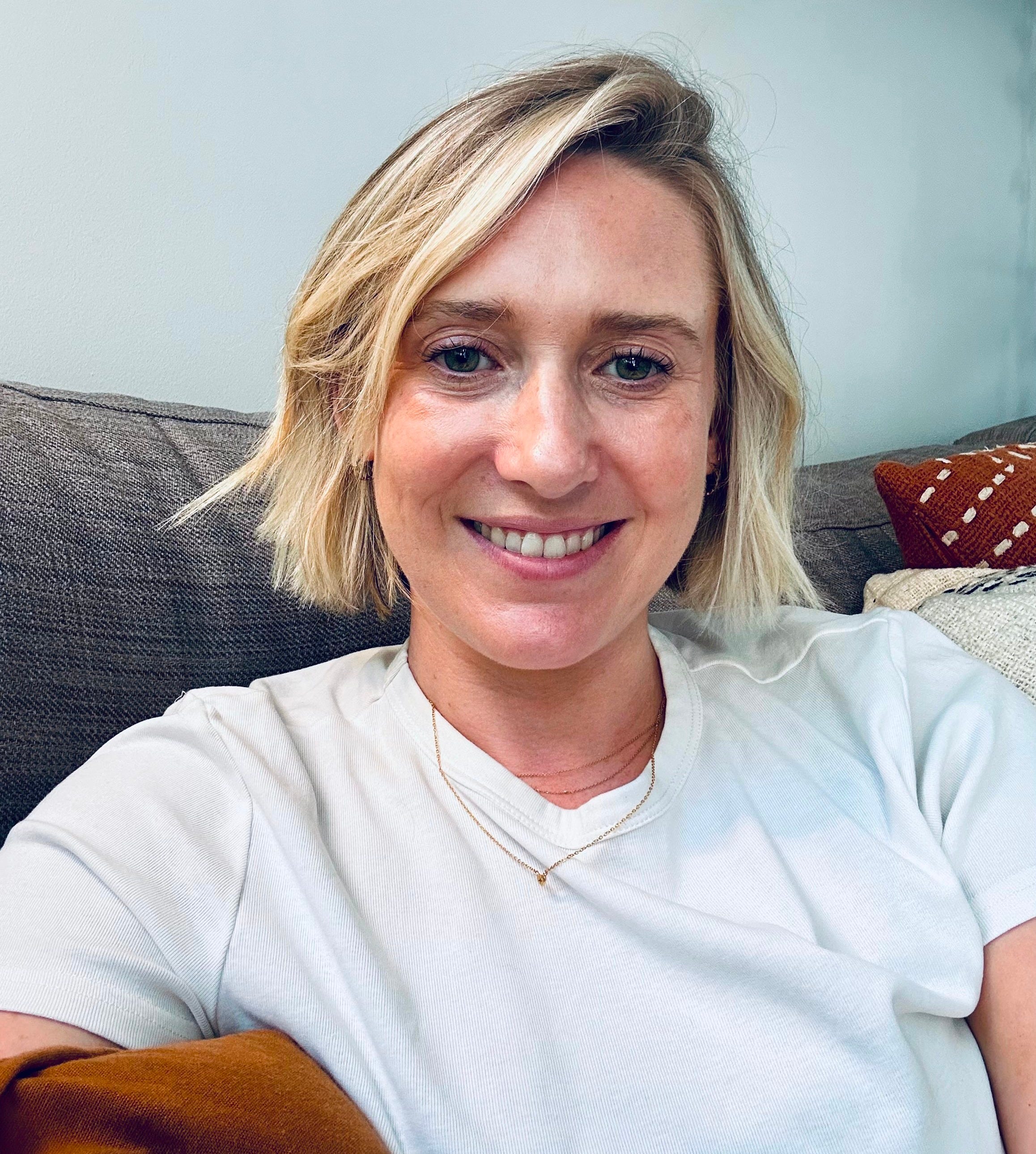
Name: Sinéad Connolly✨
Age: 38
Location: Sydney, Australia (Irish-born, Sydney for fifteen years)
Relationship status: Married
Hobbies: Reading, writing, walking, eating well, spending time in nature, slow mornings
Personal or side projects: Life Between Chapters is my Substack newsletter about identity, transition, and the messy middle. I also write and record a new interview series called What Does Your Week Actually Look Like? where I talk to people who’ve stepped off the traditional path about what their weeks genuinely look like.
Occupation: Writer, Substack creator, and advisor to the recruitment agency I founded and ran for a decade before stepping back last year.
Kids: Pregnant with our first—a boy, due November. It’s been a long road to get here, and I’m still pinching myself most days.
Who are you, and what should we know about you right off the bat?
I’m Irish, I’ve lived in Sydney for fifteen years, and I spent a decade building a recruitment agency from the ground up—growing it into an award-winning, multi-million dollar business before leaving it all behind in June 2025. That decision came after a period of pregnancy loss, burnout, and a creeping sense that the life I’d built no longer felt aligned.
Since then, I’ve been writing from the heart about my experience—the grief, the identity collapse, the financial fear, the unexpected freedom, the slow rebuilding. My Substack, Life Between Chapters, started as a place to process what was happening to me and has since grown organically.
I’m also now heading into my third trimester, pregnant with our first baby after a long and painful road to get here. So life is full, complicated, and genuinely wonderful in a way I couldn’t have predicted a year ago.
Is there a part of yourself that you’re hoping to rediscover in your second half of life?
The version of me that existed before I became a business owner. I spent a decade becoming very good at running something, and now I’m connecting back with what truly lights me up and brings me joy.
What do you care less about now than you did 10 to 20 years ago?
I used to have a genuine fear of missing out on social events and of not “keeping up” with my more extroverted peers. These days, I am far more introverted, and as long as I have my book in hand, I can be happy and at peace inside!
What do you care more about now than you did 10 to 20 years ago?
My health and listening to my body. I’m learning to embrace the fact that I’m a sensitive soul who feels things very deeply. After years of ignoring what my nervous system was trying to communicate, I’ve learned that it usually knows before my brain does.
When you imagine a good life at 50, 60, 70, or 80, what does it look and feel like?
Peaceful. That’s the word that comes to mind before anything else. Peaceful, warm, and full of people I love. I want to feel expansive in a home that feels like a sanctuary with time and spaciousness. I want to be doing work that still stimulates me but doesn’t consume me and which brings me joy and meaning.
Have any major losses, disappointments, or life transitions changed how you think about your second half?
Our journey to conceive took two years, early pregnancy losses, a couple of failed rounds of IVF, and a lot of tears. It changed everything about how I think about surrendering and about what matters.
This experience was the catalyst for resigning and leaving my business at the same time, adding another layer of complexity to the last few years—the loss of identity that comes with leaving such an established position. I’ve written about this at length because writing through it has helped me make sense of it all and keep me sane!
What are you no longer willing to postpone?
Rest. I’m still learning to slow down, but I’m getting better and know my nervous system needs it. Slow mornings, not rushing, and nourishing my nervous system are now non-negotiables.
What role do work, achievement, or ambition play in your life today compared to earlier chapters?
This is something I’ve been sitting with for over a year and writing about constantly on my Substack. The honest answer is that my relationship with ambition is completely different from what it used to be.
For most of my adult life, ambition meant success and wealth, but in the end, it came at a personal cost to me.
Now I’m trying to understand what ambition looks like when it’s not attached to external markers of success. I still want to build things—I’m not someone who is content to be entirely still and always have so many ideas. But I want to build things that feel meaningful and sustainable, not impressive and exhausting. I’m still very much in figuring-it-out mode, but it feels good to imagine a different kind of success.
What have you learned about happiness that your younger self wouldn’t have understood?
That it feels like calm. My younger self would have laughed at that. She associated happiness with excitement, achievement, the high of a big win.
But the happiness I’ve found in this slower, quieter chapter feels different. It’s steadier. It’s waking up without an alarm and not feeling guilty about it. It’s a long walk, a good book, meals with people I love. I think my life probably looks more boring now, but it is so much calmer and more peaceful.
If the second half of life has a theme or guiding principle for you, what would it be?
Self-trust. Following the breadcrumbs of what actually feels right rather than what looks right from the outside. I spent a long time outsourcing my sense of direction to external validation—metrics, recognition, other people’s opinions of my choices.
Learning to trust my own instincts has been the work of the last few years, and I suspect it will continue to be the work for a long time yet.
What does growing older mean to you now?
More growth. Every year, I understand myself a little better, care a little less about the wrong things, and feel a little more at home in my own skin, and I am very happy to continue evolving and growing.
What are you still trying to figure out?
Almost everything! Mostly, I still struggle with pacing. In my career, in pregnancy, in life, I just want to move so fast, but my sensitive body often can’t keep up with my overactive mind. I’m also figuring out what my next career looks like and how to hold ambition and ease together.
I’ve made peace with the fact that I don’t have the answers yet. The in-between is uncomfortable, but it’s also where most of the interesting things happen, and I’m learning that as I’ve spent a lot of time there this past while.
What belief about life have you changed your mind about?
That certainty is the goal. I used to believe that if I worked hard enough and planned carefully enough, I could achieve control, but so much of my life, now and recently, has been peppered with uncertainty, and learning to lean in and surrender seems to create some magic I would never have predicted.
What are you trying to say “yes” to more these days?
Quality time with the people I love—the people around us, the depth of connection, and our village really is the most important thing to carve out time for.
What are you trying to say “no” to more these days?
The pressure to have a plan, a timeline, a five-year strategy—I don’t have any of these things, and although it feels uncomfortable, I am learning to soften to the uncertainty.
What are you learning to let go of?
My inner critic that shows up when I’ve had a slow week and tells me I haven’t done enough, or produced enough. I have such full weeks, yet that voice creeps in and says I’m lazy and unproductive. It’s exhausting. I’m not sure it will ever go away entirely, but I’m getting better at noticing it and not giving it the airtime.
What feels more urgent now than it did ten years ago?
Living an aligned life—feeling expansive and open-hearted and trusting that I know what’s best. Living misaligned causes tension and friction, and I want to make the most of this life.
What would make you look back and think, “I used my time well”?
The quality of my relationships—as I said, I think this should be our main focus as humans doing this wild life ride!
What do you hope people remember about you when you’re gone?
How I made them feel—hopefully loved and seen and understood.
Big thanks to Sinéad for taking the time to answer my questions, and as always, thanks for reading! Leave a comment or question for her below. 💬
Share your story
Project Second Half explores how people of all ages are thinking about the second half of their lives. If you’d like to participate in the series, fill out this form. The more the merrier! You can also answer it anonymously if you prefer.