


Hello, hello!
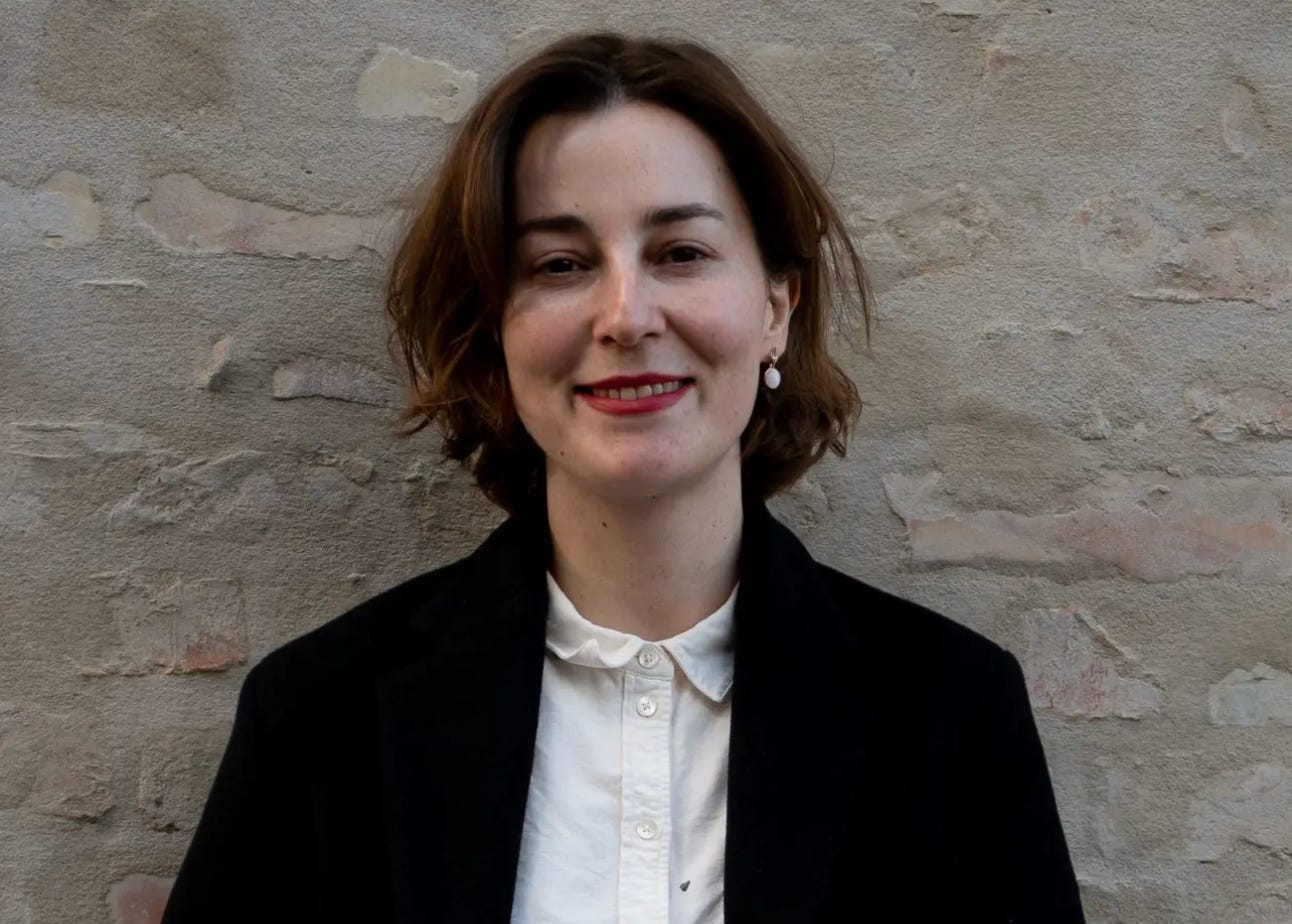
Today, I’d like to introduce you to freelance travel and culture writer Sema Karaman. She’s originally from Istanbul, but is now based in Rome, where she writes a popular Substack featuring personal essays. Her work has also been published on HuffPost, Business Insider, and more.
In this conversation, we chat about finding and creating a home away from home, changing careers, reinvention, and more.
Alexis: I read your short memoir piece about leaving Istanbul for Berlin. You wrote that you moved to Berlin in 2015, “To find a stable job that helps me afford simple things, like a place of my own, not a room at my mother’s rental, some extra clothes, maybe even furniture, the type people buy out of decoration, not necessity. My other motivations include: going on about my life without being drenched in tear gas as I move between neighborhoods. Or avoid being randomly ID-checked by the riot police carrying MP5s.”
Wow, so much in just a few sentences. Not to get too philosophical, but when you look back now, what did you actually leave behind, and what followed you no matter where you went?
Sema: It took me a long time to come to terms with the fact that the home I miss is not a physical place but rather a specific time when I experienced a set of distinct memories. Crossing the Bosphorus by ferry to get to work, having lunch with my girlfriends in Galata, the nights out that rarely wrapped up before 4 a.m. as we hopped from bar to concert to after-parties. I left Turkey when I was 23 and have since lived in six different countries.
I associate the home with the feeling of a promise of hope and expansion. I can cultivate this feeling anywhere I have relative safety, which I define by having a roof over my head and having enough food to eat. This outlook has allowed me to create many homes over the years. It also protected me from the nostalgia so many in the diaspora grapple with, and I accepted that even if I return to Istanbul one day, it will be a different city and I will be a different person.
What does “home” mean to you today, and how has that definition changed over time?
Home is definitely a feeling and not a place. It changes constantly. Currently, home is defined by my husband and my cat, who has unfortunately been diagnosed with a terminal illness and will be leaving us soon, also a set of objects I carry with me wherever I go. Some notebooks, my favorite mug, a vase I love with vibrant colors. These objects help me set the scene for my writing and give me a sense of permanence as my personal history includes a high dose of change.
Do you think home is something you find, or something you create?
I think home is something you create, and not only that but also that you keep creating. I also believe it’s relational—being home in your body, in your relationships, and with the objects you encounter every day. To the extent that they are in alignment with who I am, then I feel home.
Was there a moment when you realized you were no longer the person you were before, but not quite the person you were becoming yet? How did you navigate that in-between?
I love everything about this question. I often joke that every three years I become a new person and, to be honest, I’ve always been equally in awe of and confused by people I know who seem to have some sense of permanence in their character. Like one of my childhood best friends, whose best qualities have not changed since we graduated.
I love spending time by myself and need long stretches of alone time. I spend the majority of that time thinking about life and my place in it. Coupled with a thirst for reading and lots of therapy, this resulted in many, many ego deaths over the years. I sometimes cringe when I think about my convictions five or ten years ago and try to cultivate compassion for a version of myself who didn’t know any better but had a lot of enthusiasm for life. I also love the process of becoming, which means I probably will be a different person in 10 years. And that’s ok. Otherwise it would be very boring!
The in-between is difficult though, especially if you struggle with patience like I do. In those moments it helps me to allocate a lot of time for activities that bring me joy and ground me in my body. For instance, I’m currently working on a book, but it will probably be at least two years before it hits the shelves. Can I authoritatively call myself a writer, considering I do a lot of not-writing-related freelance work to fund my creative life? The answer is an unapologetic yes. As long as I cultivate the space to pick up a notebook and spend an hour in my favourite cafe in Rome, scribbling my little thoughts, I’m a writer.
I’m also a huge fan of visualization. I’m already visualizing the published author Sema who is connecting with readers through her book.
You’ve experienced both structured, high-performing environments when you worked in tech at Google and TikTok, and now a more self-directed life. What did success mean to you then, and what does it mean now that you’ve chosen a different path in travel writing and cultural journalism?
Today, success means having freedom with my time, not being in spaces or around people where I have to become a different version of myself to survive or be accepted, and being able to dedicate large chunks of my time to my creative life. I measure the success of my life by how often I step into joy and serendipity.
I’ve also lost any interest in accolades, titles, or traditional forms of praise. I find them empty, unfulfilling, and quite addictive. If I see myself paying attention to these kinds of things, for instance if someone asks me whether I miss working at Google, and I find myself puzzled, that often points to something that is out of alignment with myself. These days, it rarely happens.
So I find myself feeling successful on days when I wake up with the freedom to decide how I want to spend my time. These days, that might mean heading to Shell in Rome, a bookstore-café, and working on my upcoming book. Other days, it means turning up the volume on my favorite music and starting my day with a dance. Or enjoying a lazy morning snuggled up with my husband.
What finally made you take the leap? When did you realize building a successful career at tech companies wasn’t “it” for you anymore? How did it feel at the time to make such a big change?
I’ve always had a creative side, but I was in survival mode for a long time. It came to a point where I literally felt like my insides were evaporating every time I took part in an activity out of obligation, not because it was what I wanted to do with my life. They could be benign and easy tasks like attending a 30-minute Zoom meeting, but my body and mind would freeze, and I would experience physical symptoms like nausea or a migraine.
Everyone’s story is different, but for me, in terms of my personal growth, I had to experience some form of financial expansion before I took the leap. This could mean having a couple of months’ salary saved or invested, a backup plan if things didn’t work out, or building yourself an FU Fund. These numbers look wildly different for each person. I had to achieve certain milestones in my corporate career to feel safe in my body and surroundings.
This is quite interesting to me because, in creative sectors, you’ll rarely find people who want to talk about money, and I think we do each other a disservice by being guarded around this issue. I would be miserable spiritually and emotionally if I faced financial precarity because so much of my childhood was defined by that.
So it was a combination of my body no longer allowing me to be in environments or do things that only served my survival but didn’t nourish me spiritually or emotionally, and simultaneously building a safety cushion that allowed me to take the leap.
Your writing feels deeply reflective and grounded. Do you write to understand your life, or do you understand your life and then write about it?
I mostly write to understand myself, and then I write to connect.
Same here!
I say some of my best friends and mentors are writers I’ve never met in real life, and when someone responds to my writing with a profound reflection, I feel spiritually lit up.
A lot of your work touches on emotional honesty and self-confrontation. What’s something you realized about yourself that was hard to admit, but changed the direction of your life once you did?
Patience and kindness are two qualities I’m trying to cultivate more in my life. In the past, especially in my twenties, I believed that if my analysis was grounded or factually correct, it didn’t necessarily have to be delivered with compassion or kindness. I was judgmental toward people who didn’t share my political beliefs or lived their lives differently. I don’t relate to that energy anymore. I don’t want to be the cause of, or foster, more separation among people than there already is.
I’ve realized cultivating compassion and kindness for other people has also allowed me to approach myself with those qualities, and that has changed the trajectory of my life. I used to be very hard on myself and suffer from perfectionism. Not anymore. Patience is one I’m working on; please ask me in a year. :D
For women in their 30s, 40s, and beyond who feel the pull to change something big like their career, location, relationship, etc., but are afraid to disrupt what they’ve built… what would you want them to know?
I’d say that the majority of the time, if you regret disrupting your life, you can always go back to the thing you left behind with a refreshed perspective. I know many people who took a shot at entrepreneurship and actually realized it wasn’t for them. Now they have a renewed outlook on their corporate careers, which allows them to enjoy them more.
And you can’t know without trying. In my case, the cost of not trying was definitely higher than the cost of trying and failing. You can never know what’s on the other side without dipping your feet in the water. Do it, it’s not that scary.
Oh, and another unsolicited piece of advice. Don’t listen to doomsday scenarios. There are plenty out there, such as “AI is going to take your job, and the cost of living is gonna get worse”. People who throw these doomsday scenarios hold on to their negative critique as a false sense of control. We don’t know what we can’t know. You don’t have to participate in it. I think we shouldn’t be overly influenced by these overly negative scenarios. I’ve read a wonderful Substack post on AI, which made me think for a moment that we just don’t know enough yet.
And hey, if we get there we’ll have to deal with it anyway. In the meantime, we can focus on what matters, which, for me at the moment, is my creativity, writing, and building a community.
Before we go, a few rapid-fire questions
What does home feel like in one word?
The peonies in the colorful ceramic vase on my table remind me that I’m in Italy, in my new home, and living a chapter of life that feels brighter, more colorful, and a little more fun.
Is there a specific place you return to—physically or mentally—when you feel lost?
Yes, two places. Anywhere where there is a large body of green or water. Nature. Currently, my go-to places are Villa Borghese in Rome and Canetto Beach when I’m in Puglia. If I insert myself in nature, focus on my breathing, and listen to the sounds around me, I’m mostly fine.
What are you reading right now?
Is A River Alive by Robert MacFarlane on how rivers are not soulless resources for human consumption but rather living beings.
What are you working on—professionally or personally—these days?
My upcoming book is based on a viral essay I wrote on travel a year ago. It’s the most exciting thing I’ve ever done.
Oh, very exciting! Based on what you’ve learned and experienced so far in the world of book publishing, what’s your top tip for aspiring non-fiction authors?
Writing a good book proposal is key. I took this workshop by Edgar Gomez, a brilliant non-fiction writer who really studied the ins and outs of a good book proposal. We as creatives LOVE to talk about the fun stuff, which is being creative, but the way publishing works today is very business-oriented. So understanding your “comparative titles”, which are books in your genre that are similar to yours in theme and audience, is really key.
Do you have any small rituals that help you feel grounded, wherever you are?
Three things: Starting the morning with coffee. Walking, long walks. And meditation. In a new place, if I can find a park and sit on a bench to meditate for 10 minutes, I’m mostly fine.
Subscribe to Sema’s Substack and follow her on Instagram to stay in touch!
Thanks for reading! If you have any questions for Sema or me, drop them in the comments below.
See you soon,
Alexis
P.S. If you enjoyed this post, hit the ♡ button below and/or share it to help others find it. To further support my work, consider buying me a coffee (on repeat). Thanks so much.
Really enjoyed this. Especially the bit about reframing a fear of regret as a chance to return with a refreshed perspective. Great interview, both!