

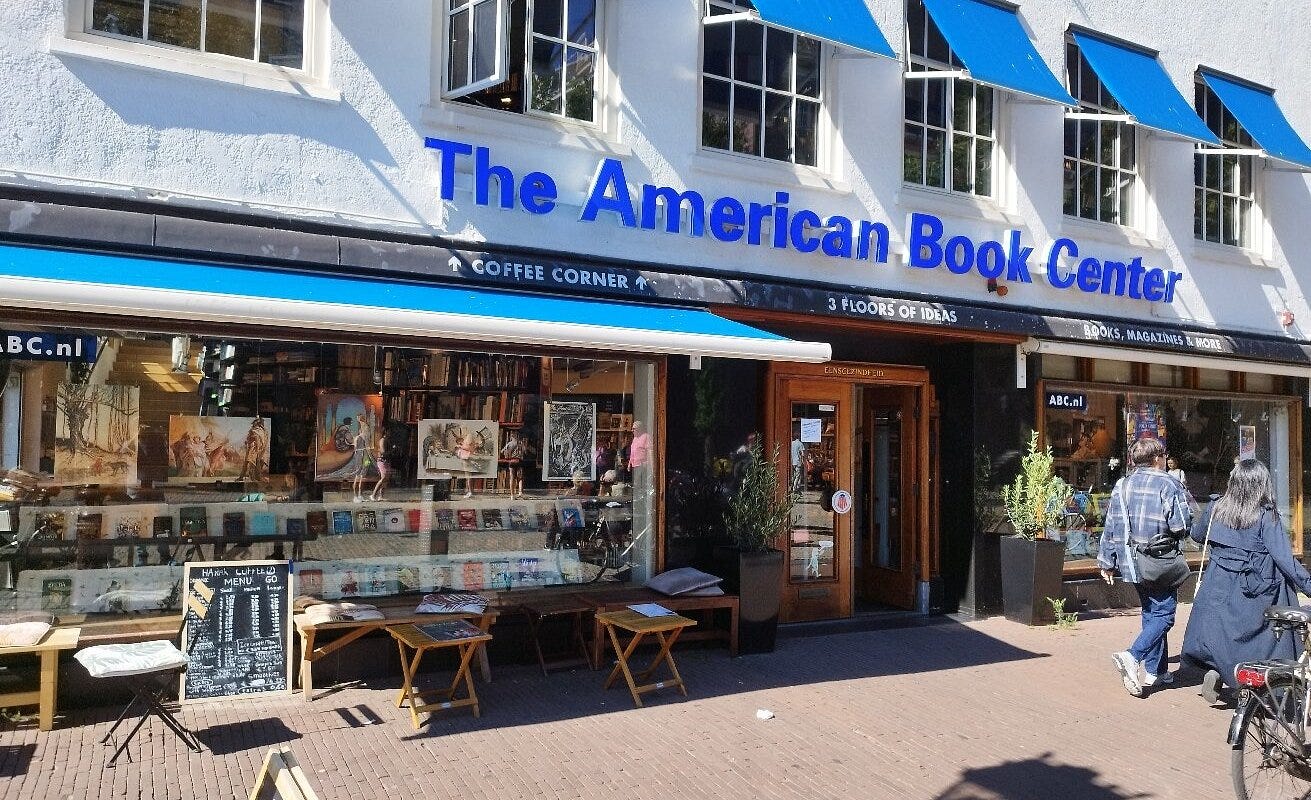
Last Friday, I went to a book talk at The American Book Center, an independent English-language bookstore here in Amsterdam. It was my first time attending this type of event, but I figured if I hope to write a book one day, I’d better start learning more about how all this works.
The author, Sue Deagle, wrote a short, digestible guide for dealing with loss — the loss of a job, an opportunity, your home, a relationship, a dream, a loved one, or yourself. It’s called Do Loss, and I read it in one gulp that night in bed. Wild Friday night, I know.
I like how Sue framed the different stages of grief as cocooning, adapting, and emerging. She also reassures the reader that you might dip in and out of the different stages. There’s no right way to do it. I think it’s important to accept that you’ll never be the you that you were before. You’re learning this new version of yourself.
She also reminds us that two things can be true at once. Both/and. It made me feel better — or more normal — about the fact that while losing my mom recently was one of the saddest, hardest experiences of my life, I’m also allowed to be relieved that her suffering and our living in limbo is over.
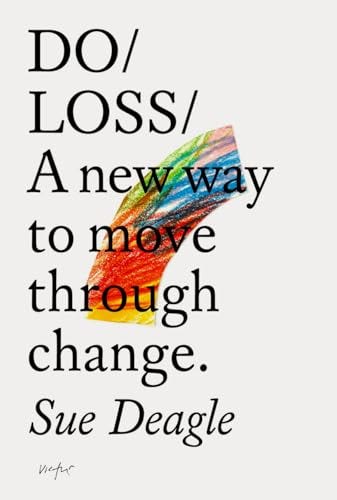
Sue writes:
“You’re transformed and you’re still you. You honor what was lost and embrace what’s new. You can feel joy and still have moments of sadness. You’ve grown stronger and the hurt doesn’t vanish. This isn’t emotional confusion — it’s emotional maturity.”
I think letting duality exist and learning how to hold both feelings is important not only in grief and loss but in most areas of life!
♢♢♢
My work is reader-supported — show your love and stay in the know!
Before the event, while waiting for a friend in front of the ABC, I noticed an older man who didn’t look well. He stood next to a garbage bin, his right forearm resting on it, and his left hand on his chest. He looked stunned. He wore a dark blue velvet blazer, glasses, and khaki pants. His face looked pale, but I also had no idea what he looked like when he was well. I observed for a minute to avoid crowding him. Then he walked a few feet to a bench and stood, leaning against its back. I thought he might keel over, so I approached him.
“Are you OK?” I said.
“No,” he said.
“Would you like me to call someone?” I said
“What did you notice?” he said.
“You looked unsteady, and you were touching your chest,” I said.
“Yes, I don’t know what’s happening,” he said.
Then he put both hands on his chest to indicate where he felt pressure. His face grew paler, and I noticed moisture developing near his temples.
“Who should we call?” he said.
“Your family? 112?” I said.
“112,” he said.
I called 112 (the equivalent of 911 in the US). Once someone answered, he reached over and asked for my phone.
He held my phone to his left ear and explained his symptoms to the operator. He spoke in Dutch, so I didn’t understand everything, but I got the gist. He was feeling chest pressure and tingling in his arm. He also mentioned his age: tweeënzestig (sixty-two). Holy s—! This is serious, I thought.
In the 10–15 minutes that we waited for the ambulance to arrive, he was calm. He asked my name and what I do in Amsterdam, which I appreciated, but it also felt trivial to talk about. Like most things have felt for me in the almost three months since my mom died. I am definitely still in the cocooning phase of grief.
♢♢♢
I asked again if he wanted me to call someone. A family member. He said his son was working until 5 pm and that he didn’t want to bother him. That surprised me; it was only 45 minutes until then. I would want to know if my dad was experiencing chest pains and waiting on the street for an ambulance. But then again, why worry your family if they can’t control the outcome?
“Do you have a piece of paper?” he said.
I pulled out a notepad from my backpack, and before I could tear off a sheet of paper, he said, “No, leave it like that,” and reached for it.
He jotted down his name, email, and phone number, using a felt-tip pen, then passed it back to me to do the same. I tore off the bottom half with my information and handed it to him. He folded it and put it in the inside left pocket of his dark blue velvet blazer. The other piece, with his info, remained attached in my notebook.
It felt very old school, sharing information on paper when we both have iPhones, but it was also endearing.
We stood there together in silence on a beautiful, sunny spring day. Two strangers, sharing this scary moment. I didn’t know what to say, or if I should say anything at all. I also didn’t want to make him use his energy on small talk.
“I’m sorry I’m not more communicative,” he said.
“Oh, please, do not worry,” I said. “That’s OK.”
Then I offered him water, pulling my half-full, light purple Nalgene bottle from my backpack. He took a few sips, let out a few burps, and then apologized. Again, I told him not to worry.
Poor man, I thought. This must be scary, but he was still so calm. Concerned, but holding it together.
The irony was that I was heading into a book talk about loss, and the book was written by a woman who had lost her husband 10 years ago to a heart attack.
♢♢♢
When we heard the ambulance sirens coming around the corner, I ran out to the street looking for the bright yellow vehicle with blue flashing lights, waving my arm, like I’d hail a taxi in New York.
After I passed my new friend off to the ambulanceverpleegkundige (ambulance nurse), I ran into the bookstore, up the two flights of stairs to the room where the book talk was taking place. All the seats appeared to be full.
“Sorry, I’m late!” I said. “There was a man outside having chest pains, so we called an ambulance, and I wanted to wait with him.”
“That’s the best excuse I’ve ever heard,” the bookstore employee said. A man, whom I assume was in his 40s with dark hair and round glasses with a black frame, kind of like an older, attractive Harry Potter.
“It sounds like you saved his life,” he said.
“Well, I don’t know about that,” I said.
Then he found me a seat so I could watch the rest of the book discussion. Sue talked about writing Do Loss and explained that after working in corporate America for over 30 years, this was her calling. She read a passage that was a note her husband had left in a box, explaining that he wanted her and their kids to be happy and carry on even if he were gone. If something happened to him.
They handed out pens and a piece of paper, while Sue instructed us to draw a diagram — essentially a continuous line with peaks and valleys — to illustrate the highs and lows in our lives. It shows us how resilient we are. It’s our default to bounce back, and we always recover, eventually. We fear hitting rock bottom, but the beauty of that is that the only way is up.
♢♢♢
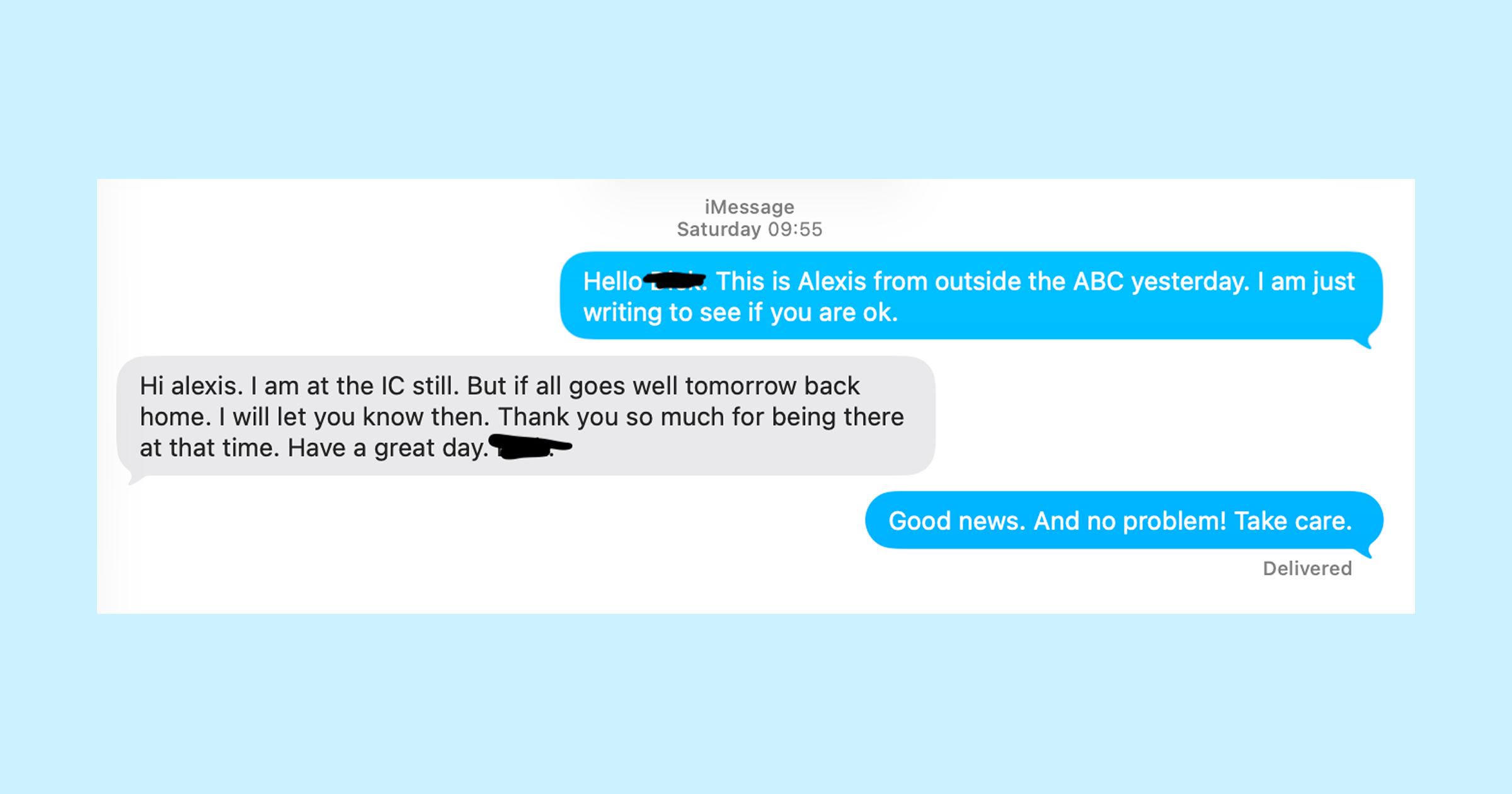
The next morning, I couldn’t stop thinking about the man in front of the bookstore. I wondered if he was OK, so I sent him an SMS.
He replied:
“Hi alexis. I am at the IC still. But if all goes well tomorrow back home. I will let you know then. Thank you so much for being there at that time. Have a great day.”
I was relieved. I wasn’t expecting to hear from him again, but on Monday, I noticed an email with the subject “Kindness of a stranger” in my inbox.
He wrote:
“As you can probably imagine, your alertness, especially in retrospect, has been the subject of much thought. I am not sure what I would have done if you had not stopped and inquired about my wellbeing and been so kind as to stay there with me for the next 12 minutes.”
I smiled at the fact that he remembered — even in a moment of distress — that it was exactly 12 minutes. It feels like a very Dutch thing to be so precise. He also confirmed that he was indeed having a heart attack, but that the damage was minimal since everything went quickly.
Then he wrote:
“I hope we will get a chance to maybe meet once again - but this time intended - so I can thank you over a coffee in person.”
I’m glad I was paying attention to my surroundings that day instead of doomscrolling as I waited for my friend in front of the bookstore, because if I hadn’t, who knows what would’ve happened.
Helping a stranger in need felt small and insignificant at the time, but now I realize I was part of a brief moment that could have gone very differently.
A lot has felt pointless, muted, and trivial lately, but standing there with him, in those 12 minutes that he remembers so precisely, I was pulled out of my own head and planted back into the present. Into someone else’s life. Into something that really mattered right then and there.
Maybe that’s part of the both/and, too. You can be deep in grief and still show up for a stranger. You can feel the weight of loss and still be part of something that keeps another person here a little longer.
When I think back on that day — the diagram of life’s peaks and valleys, the note Sue’s husband left about carrying on, helping the man in a velvet blazer — I’m reminded that life keeps moving. It pulls you back in, even when you feel like you’re watching from the sidelines.
♢♢♢
Thanks for reading this random story, and in case you missed it, I recently shared some other loss and grief-related books here.
Take care,
Alexis
P.S. It would mean a lot to me if you hit the ♡ button to help others find this post. Also, if you are able to upgrade your subscription or share my work with a friend, I would be so grateful! Thank you so much. (Also, I don’t have an editor, so pardon any misplaced commas or run-on sentences; I’m human. 🤗)
I love this story x
This is a beautiful story Alexis, thank you for sharing it ♥️